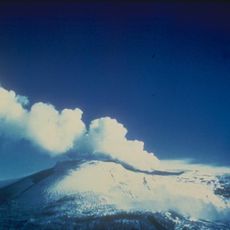
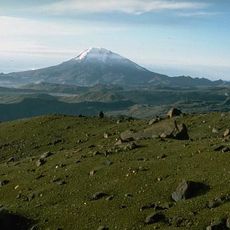
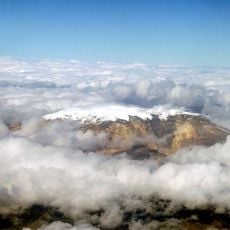
Nevado del Quindío, Stratovolcano in Central Cordillera of Andes, Colombia.
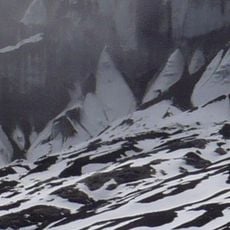
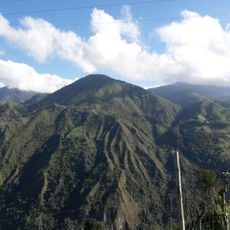
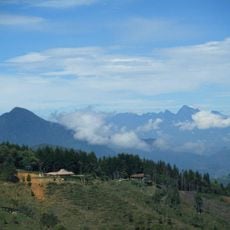
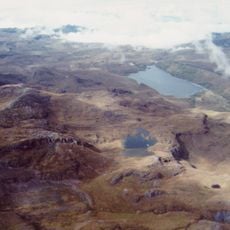
Nevado del Quindío is a stratovolcano in the Central Cordillera of the Colombian Andes, sitting at the meeting point of the Quindío, Risaralda, and Tolima departments. Its steep flanks are covered with exposed rock faces and sparse high-altitude vegetation that thins out considerably toward the summit.
The volcano was explored by naturalists in the early 1800s, who recorded plant species on its slopes that were previously unknown to science. Over the following centuries, the ice that once covered the upper part of the mountain gradually retreated and eventually disappeared entirely.
The name shifted from Nevado del Quindío to Paramillo del Quindío as the ice vanished: "paramillo" points to páramo terrain rather than permanent snow. Alexander von Humboldt's 1801 visit led to the description of the frailejón, and Colombia's postal service Adpostal issued a stamp pairing the mountain with him. A watercolor of the volcano by Manuel María Paz (1820–1902) is kept at the National Library of Colombia.
Visibility on the upper slopes is best during the dry season, which generally falls around December to February and June to August. Anyone planning to hike should set out early in the morning, since cloud cover tends to build quickly at this elevation and weather can shift without warning.
Although the summit is now free of ice, this was once the only glaciated volcano in Quindío Department, making it stand out from all the other peaks in the area. The bare rock near the top still shows polished surfaces left behind by the movement of that former ice.
The community of curious travelers
AroundUs brings together thousands of curated places, local tips, and hidden gems, enriched daily by 92,804 contributors worldwide.