Teatro Juárez, Opera house in central Guanajuato City, Mexico
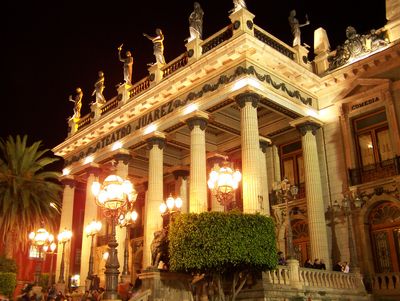
Teatro Juárez is a late-19th-century theater in Guanajuato whose cream and pale gray stone facade carries a raised colonnade of tall fluted Doric columns with dark bases and capitals. Above the cornice, a parapet holds eight bronze statues of the Greek muses, each 3.5 m high and ordered from Ohio. The entrance is flanked by two bronze lions by sculptor Jesús Fructuoso Contreras, and a low stone balustrade, a tall street lamp and clipped shrubs stand before the steps.
The theater rose on land that held the Emporio Hotel, demolished in 1872, and before it the first Discalced Franciscan convent of Guanajuato, of which only the baroque San Diego temple and two chapels remain. José Noriega designed it for governor Florencio Antillón; Antonio Rivas Mercado and engineer Alberto Malo later reworked it. Porfirio Díaz inaugurated it on 27 October 1903 with Verdi's Aída.
This performance venue honors Mexican reform president Benito Juárez and today hosts artists from around the world on its stage. Each October, audiences from many countries fill the seats during the Cervantino Festival to watch opera, drama and classical music.
The building stands on the southeastern corner of Jardín de la Unión and opens its doors for guided tours during the day. Evening performances take place, so visitors can experience the interior either during daytime visits or by attending a show.
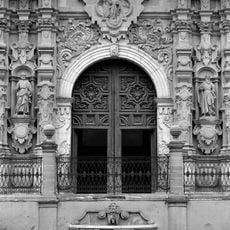
The entrance hall mixes French design with Moorish elements, so European ornaments stand beside arches inspired by Arabic traditions. This combination appears in the carvings, railings and wall panels that bring different traditions into one room.
The community of curious travelers
AroundUs brings together thousands of curated places, local tips, and hidden gems, enriched daily by 93,784 contributors worldwide.