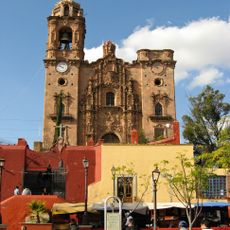
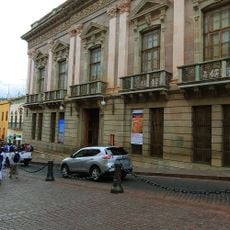
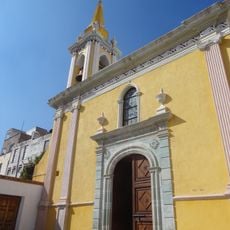
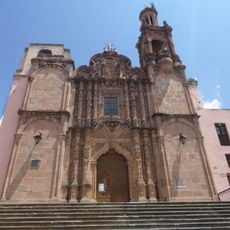
Basílica Colegiata de Guanajuato, Minor basilica in Plaza de la Paz, Guanajuato City, Mexico.
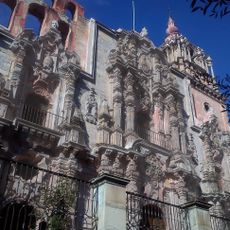
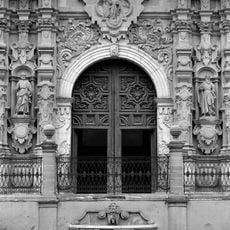
The Basílica Colegiata de Nuestra Señora de Guanajuato was built between 1671 and 1696 with a Baroque and Neoclassical exterior. Its main portal has three sections; inside, the Latin-cross plan holds one nave, a dome, a transept, two bell towers and a gilded altar with the Virgin. A tubular organ of 1,098 pipes stands out.
Built between 1671 and 1696, the church was financed by Guanajuato miners, including Antonio de Obregón y Alcocer, owner of the La Valenciana mine. In 1557 Philip II had sent the cedarwood Virgin to the mining town; the present building was raised to house it. It became a basilica in 1957 and part of the UNESCO World Heritage site in 1988.
The statue of the Virgin and Child, carved in cedar and polychrome, arrived in 1557 as a gift from Philip II in thanks for the silver the mines sent to Spain. Each 8 August the city celebrates its arrival. The church also holds the remains of Celedonio de Jarauta and Faustina Mártir, granted by the Count of La Valenciana.
The basilica faces the Plaza de la Paz, beside the plaque marking Guanajuato's historic centre as a UNESCO World Heritage Site, so it is reached on foot through the compact centre. The interior follows a Latin cross plan with a single nave, a dome and a crossing; the gilded altar and the 1,098-pipe organ are the elements to locate first.
The cedarwood image of the Virgin and Child arrived in 1557 as a gift from Philip II, sent in thanks for the silver the Guanajuato mines shipped to Spain. It was carved in Andalusia and, according to local tradition, had been hidden in a cave in Granada for eight centuries before its rediscovery.
The community of curious travelers
AroundUs brings together thousands of curated places, local tips, and hidden gems, enriched daily by 94,147 contributors worldwide.