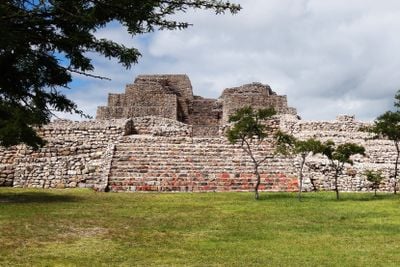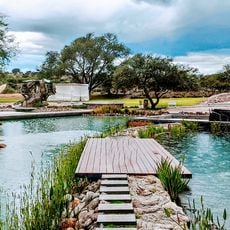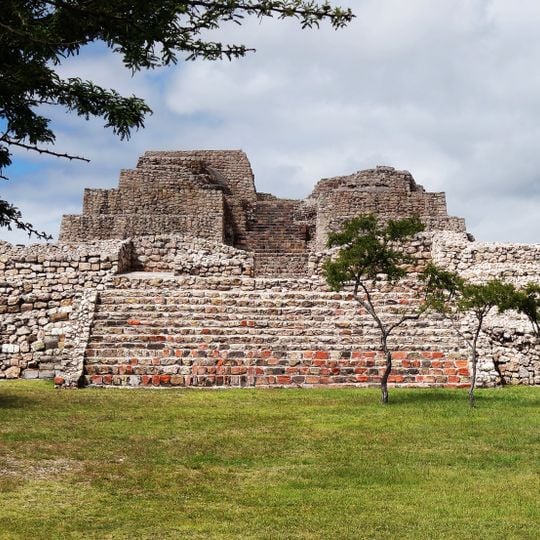
Cañada de la Virgen, Pre-Hispanic archaeological site near San Miguel de Allende, Mexico.
Cañada de la Virgen is a pre-Hispanic settlement on a mesa with seven pyramid-shaped structures, an artificial pond, and a ceremonial causeway. The site spans roughly 16 hectares and displays careful planning along with mathematical and astronomical knowledge integrated into its design.
The settlement developed between the 6th and 11th centuries following the fall of Teotihuacan, established by the Otomi civilization. It represents a period when astronomical science and mathematical planning flourished in Mesoamerica.
The main temple complex served as an observation station where priests tracked the movements of Jupiter and Venus to determine planting times. These astronomical observations were deeply woven into the community's daily rhythms and religious practices.
Visitors can explore the site only through guided tours offered Tuesday to Sunday. The walk to the main structures takes about three hours across the mesa, so bring comfortable shoes and plenty of water.
Each building complex on the site aligns with specific sky events, revealing the sophisticated knowledge the ancient inhabitants held of celestial cycles and positions. This was not accidental design but a deliberate system linking buildings to the heavens.
The community of curious travelers
AroundUs brings together thousands of curated places, local tips, and hidden gems, enriched daily by 91,342 contributors worldwide.