Sanctuary of Atotonilco, Catholic pilgrimage church in San Miguel de Allende, Mexico
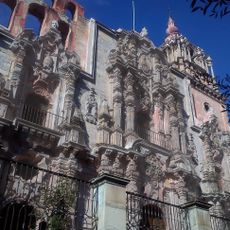
Sanctuary of Atotonilco is a pilgrimage church near San Miguel de Allende featuring extensive interior decoration with religious murals. The main worship space and adjoining chapels contain detailed frescoes painted directly onto the walls and ceilings throughout the building.
A priest started building this religious complex in 1740, which later became an important symbol during Mexico's independence movement. The site developed into a key place of religious devotion and national resistance in the region.
The sanctuary's official name is Santuario de Dios y de la Patria, and it still functions as a house of spiritual exercises following the Ignatian model, receiving up to 5,000 visitors weekly. Its murals were painted to teach: Father Neri's verses run along the arches above each vaulted scene of the Passion, and a painted wooden screen at the entrance carries allegories, Biblical passages and saints.
The sanctuary sits on a hillside outside San Miguel de Allende and requires a short bus ride or organized tour to reach it. Visitors should wear comfortable shoes since exploring the different chapels and areas involves walking and climbing stairs.
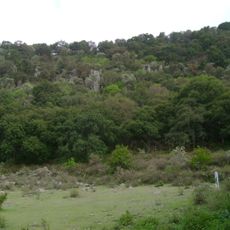
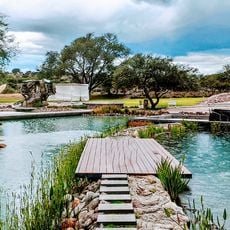
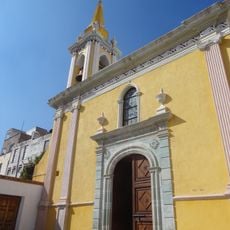
The complex's east-west axis is deliberate: the main entrance arch faces east, toward Jerusalem, because Father Alfaro modelled the church on the Holy Sepulchre. The landscape of dry grassland, thistles, acacia and mesquite was compared to Jerusalem, giving believers a link to the Holy Land. Thermal water still rises about one km away, and a spring at the community entrance is covered by an artificial cave used as the Balneario La Gruta spa.
The community of curious travelers
AroundUs brings together thousands of curated places, local tips, and hidden gems, enriched daily by 94,630 contributors worldwide.