Museo de Geología de la UNAM, Geology museum in Santa María la Ribera, Mexico City, Mexico
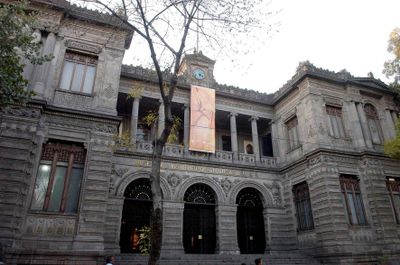
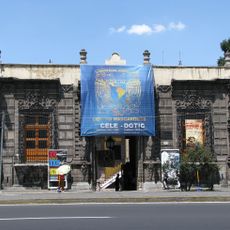
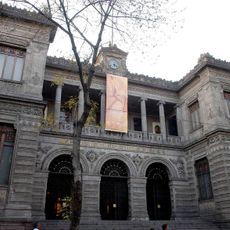
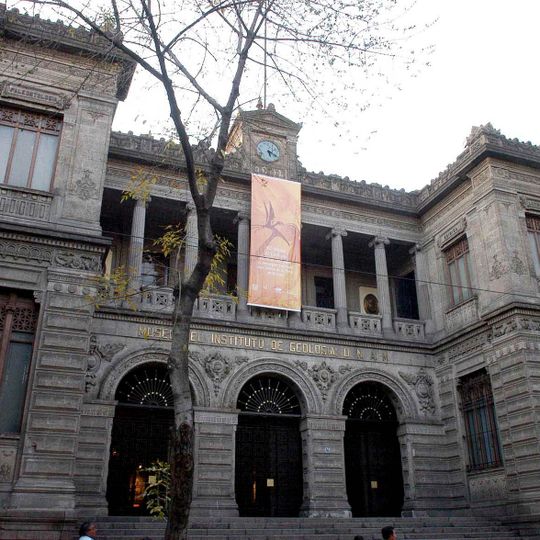
The Museo de Geología de la UNAM occupies a cantera stone building in Colonia Santa María la Ribera, Mexico City, designed by architect Carlos Herrera López and engineer José Guadalupe Aguilera Serrano. Its symmetrical facade has three arched doorways, an inscription reading "MUSEO DEL INSTITUTO DE GEOLOGIA UNAM", a row of Ionic columns, and a small clock tower. The friezes carry low-relief fossils of fish, shells and reptiles.
The building was designed by architect Carlos Herrera López and engineer José Guadalupe Aguilera Serrano, and opened on 6 September 1906 during the X Geological Congress. In 1929 it became part of UNAM as the Instituto de Geología, and in 1956 the academic staff moved to Ciudad Universitaria, leaving the building as the museum.
The museum lobby incorporates Pompeii-influenced design elements, featuring detailed mosaics, stained glass artwork, and oil paintings with scientific themes.
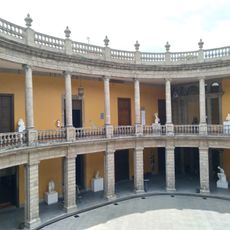
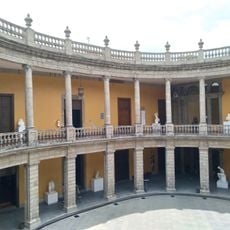
The museum stands at Jaime Torres Bodet 176 in Colonia Santa María la Ribera, not on the university campus; the Institute of Geology moved to Ciudad Universitaria in 1956 while this building stayed a museum. The entrance is up a wide flight of steps through three arched doorways, and the stair hall inside leads to the upper galleries.
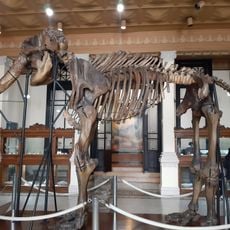
The first dinosaur found, collected and restored in Mexico, called Isauria, was exhibited at the museum in 2003 for UNAM's 450th anniversary. The lobby holds ten oil paintings by José María Velasco tracing life from the seas to early humans, and seven leaded glass landscapes dated 24 March 1903.
The community of curious travelers
AroundUs brings together thousands of curated places, local tips, and hidden gems, enriched daily by 93,873 contributors worldwide.