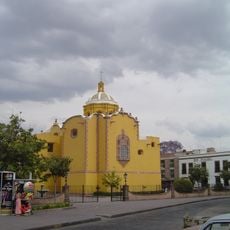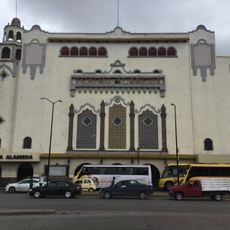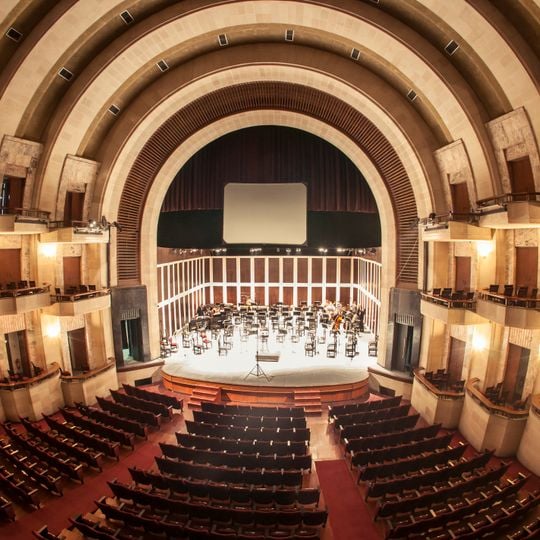
Teatro de la Paz, Neoclassical theater in San Luis Potosí, Mexico.
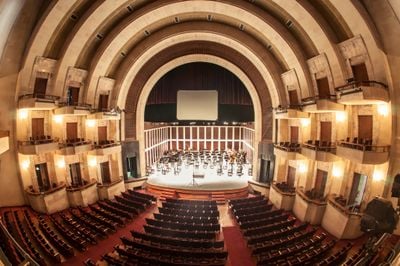
Teatro de la Paz is a neoclassical theater building in San Luis Potosí featuring a Belgian bronze dome with an imperial porphyry eagle and a central dancer statue in the vestibule. The interior spaces are decorated with mosaics by Fernando Leal and bronze sculptures by Joaquín Arias.
The first stone was laid on 16 September 1889 by governor Carlos Díez Gutiérrez, and the theater opened on 4 December 1894 with Donizetti's Lucrezia Borgia. The land had belonged to the Carmelite convent, then served as a jail after the 1870 Reform Laws. Architect José Noriega, who also built the Teatro Doblado, Morelos and Juárez, designed it; Francisco Cossío remodeled the interior between 1944 and 1949.
The theatre's name comes from the Paz (Peace) era in which it opened, and its staircase on Plaza del Carmen serves as an informal stage for clowns and urban troubadours. Inside, mosaic murals by Fernando Leal recount the building's history, while the adjacent Sala Flavio F. Carlos and Sala Germán Gedovius host concerts and exhibitions.
The main forum is reached through the pink-quarry facade on the Plaza del Carmen. Two annex rooms sit off the internal staircase: the Flavio F. Carlos concert room on the left and the Germán Gedovius exhibition room on the right. Look up in the auditorium for the dome made in Paris and the mosaic murals by Fernando Leal.
The bronze dancer by sculptor Joaquín Arias Méndez has an odd pose: her legs are together with a slight bend while her feet lift off the ground. Few visitors notice it. The theater also holds mosaic murals by Fernando Leal depicting its history.
The community of curious travelers
AroundUs brings together thousands of curated places, local tips, and hidden gems, enriched daily by 94,090 contributors worldwide.