Sebastopol House State Historic Site, Greek Revival historic site in Seguin, United States.
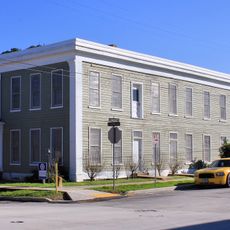
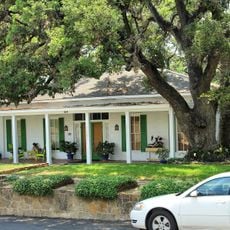
Sebastopol House State Historic Site is a residential building showcasing Greek Revival style located in Seguin, Texas. The structure features a spacious front porch with tall columns and ornamental woodwork typical of 1850s construction methods and design.
Joshua W. Young built Sebastopol House between 1854 and 1856 for his sister Catherine LeGette, using "Park's concrete", a limecrete patented by Seguin doctor and chemist John Park after his 1846 arrival. The walls are unreinforced cast-in-place concrete poured into board forms 12 to 18 inches wide, held by screws and oak spacers, with caliche dug on site leaving a basement. Joseph Zorn Jr. bought it in 1874; it stayed in the Zorn family until 1961, and the state acquired it in 1976.
The name Sebastopol comes from the Crimean War siege of 1854–55, which was in the news while the house was being built. Joseph Zorn Jr., mayor of Seguin from 1890 to 1910, lived here and helped establish the town's first free public schools. The house is restored to its 1880s appearance.
The site is open to visitors who can take guided tours to learn about the architectural details and the house's history. Check the opening hours before planning your visit.
Sebastopol House was listed in the Historic American Buildings Survey in 1936, before being named a Registered Texas Historical Landmark in 1964 and added to the National Register on August 25, 1970. It is one of the oldest and largest unreinforced cast-in-place concrete buildings in Texas.
The community of curious travelers
AroundUs brings together thousands of curated places, local tips, and hidden gems, enriched daily by 92,783 contributors worldwide.