Pilot Knob, Extinct volcano in Austin, Texas
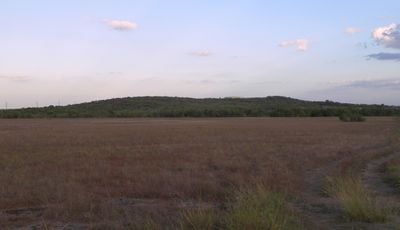
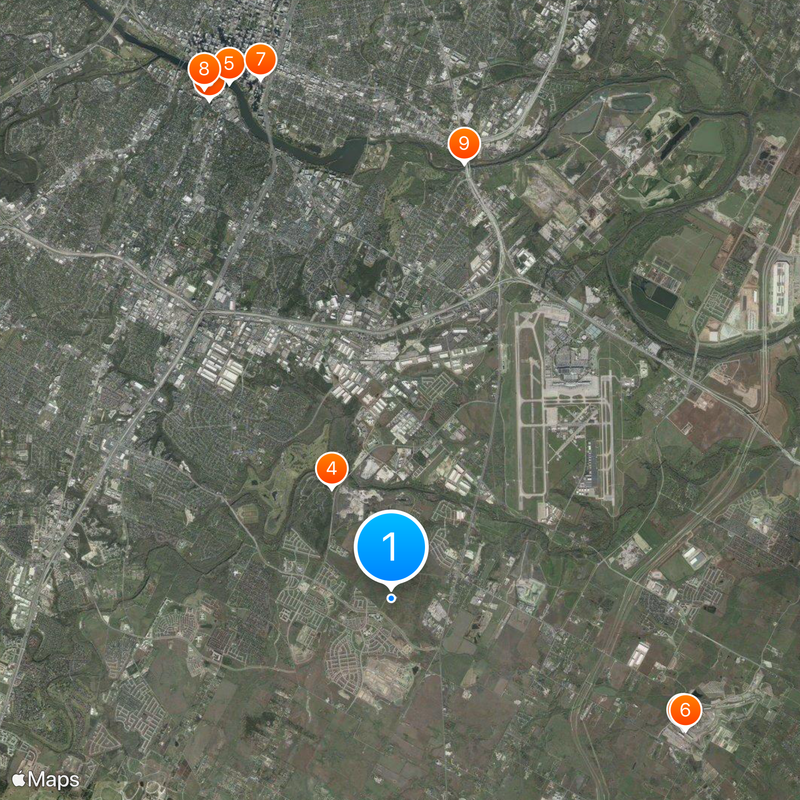
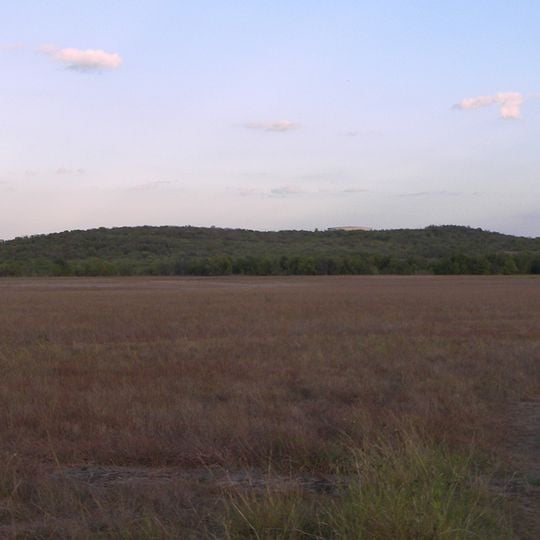
Pilot Knob is an extinct volcano in Travis County, Texas. The formation consists of four rounded hills that together create a central area with a diameter of roughly two miles (three kilometers).
Around 80 million years ago, this volcano formed when magma met waterlogged sediments in a marine setting. The eruption left ash and rock that mixed with the marine deposits of this region.
The knob's trap rock, an erosion-resistant fine-grained mafic lava, caps the hill and is what remains after the surrounding ash and sediment wore away. The four rounded hills of the core sit within a two-mile circle drained by Cottonmouth Creek, and a lithified beach deposit from the volcano's shoreline forms the ledges at Upper and Lower McKinney Falls on Onion Creek.
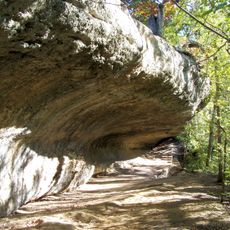
Visitors can observe volcanic deposits beneath limestone overhangs at the upper and lower falls in nearby McKinney Falls State Park. The trails in this area suit walking during dry weather, while the rock layers show best in good light.
The resistant trap rock of the core and its satellite bodies is what remains after the surrounding ash and softer sediments eroded away. A lithified beach deposit from the volcano's later history now forms the cap rock of Upper and Lower McKinney Falls on Onion Creek, several miles north.
The community of curious travelers
AroundUs brings together thousands of curated places, local tips, and hidden gems, enriched daily by 92,879 contributors worldwide.