Waco Mammoth National Monument, Paleontological national monument in Waco, United States.
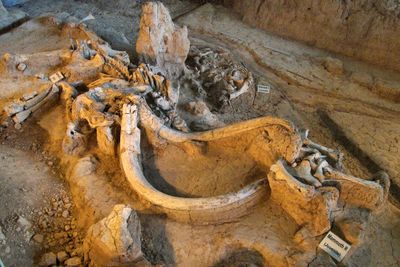
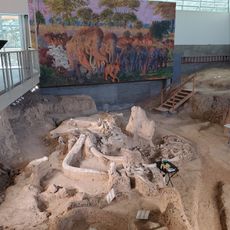
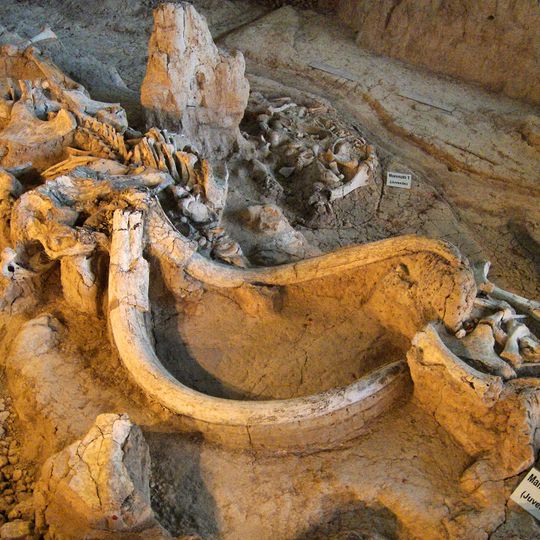
Waco Mammoth National Monument protects a five-acre excavation site where the bones of 24 Columbian mammoths lie in the ground inside a purpose-built shelter. A curved tusk sweeps through cracked light-brown earth, a lower jaw with teeth rests nearby, and small labels such as "Mammuthus (juvenile)" mark individual animals. The surrounding 100-acre wooded parkland along the Bosque River remains largely unexcavated.
Discovery began in 1978 when two teenagers found mammoth bones, sparking systematic excavations at the site. The fossils date to the Pleistocene epoch, approximately 67,000 years ago, showing that these animals lived and died in this region.
The name comes from the mammoth bones themselves: the first finders took a 3-foot bone to Baylor's Strecker Museum, where it was identified as a Columbian mammoth. Today the site is run by the City of Waco, Baylor University and the National Park Service, and the Waco Mammoth Foundation supports it. Visitors can see fossils still in the ground, some with small labels such as "Mammuthus (juvenile)".
You can view the fossils through guided tours at 6220 Steinbeck Bend Drive during hours running Tuesday through Saturday. The site sits near the riverbank, so visitors should prepare for uneven ground and stairs when moving around the shelter.
More than half of the area protected by the shelter has never been excavated, and nearly all the ground outside it remains unexamined for fossils. Two of the 24 mammoths were found only while the shelter was being built. The first bone, a 3-foot specimen, was pulled from the ground in 1978 by teenagers Paul Barron and Eddie Bufkin, who thought it belonged to a cow.
The community of curious travelers
AroundUs brings together thousands of curated places, local tips, and hidden gems, enriched daily by 92,790 contributors worldwide.