Pleasant Reed House, Historical museum in Biloxi, United States.
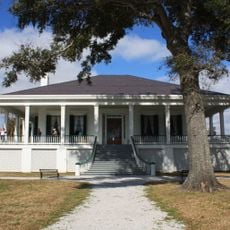
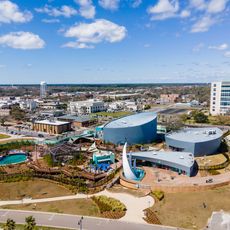
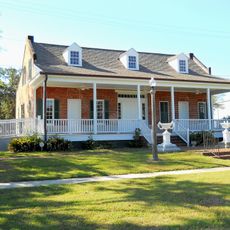
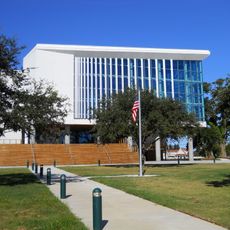
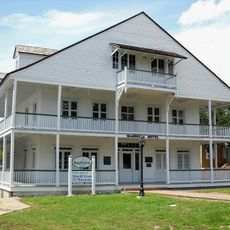
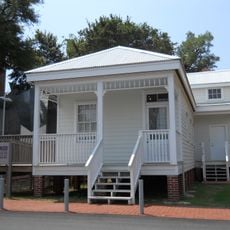
The Pleasant Reed House is a sidehall shotgun house: a narrow wooden residence with a hall running along one side of its rooms. The original, built by Pleasant Reed, was destroyed by Hurricane Katrina in 2005; the Pleasant Reed Interpretive Center, a replica, opened on September 29, 2008, on the Frank Gehry-designed Ohr-O'Keefe Museum of Art campus and holds exhibits on local African American history.
Pleasant Reed, born in 1854 and formerly enslaved on a Mississippi farm, moved to Biloxi after the Civil War and worked as a laborer and carpenter to build this sidehall shotgun house for his family. The Biloxi chapter of Delta Sigma Theta saved it, and it was listed on the National Register in 1979. Moved in 2003 to the Frank Gehry-designed Ohr-O'Keefe Museum of Art campus, it was destroyed by Hurricane Katrina on August 29, 2005; a replica, the Pleasant Reed Interpretive Center, opened on September 29, 2008.
This reconstructed house functions as an interpretive center, documenting the lives and experiences of African American residents in Mississippi. Visitors can explore exhibits that reflect the community's history and stories.
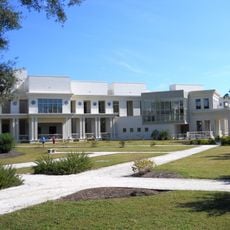
The Pleasant Reed Interpretive Center stands on the Ohr-O'Keefe Museum of Art campus, designed by Frank Gehry, in Biloxi. The original house was moved there in 2003 before Hurricane Katrina destroyed it in 2005; the replica opened on September 29, 2008. Look for the center within the museum grounds.
The original house was saved from demolition by the Biloxi chapter of the Delta Sigma Theta sorority, which helped get it listed on the National Register of Historic Places in 1979. After Hurricane Katrina destroyed it in 2005, curators rescued the archival materials and photographs, and the board of trustees voted to rebuild.
The community of curious travelers
AroundUs brings together thousands of curated places, local tips, and hidden gems, enriched daily by 94,586 contributors worldwide.