Carmel Moravian Church, Moravian church building in Westmoreland Parish, Jamaica
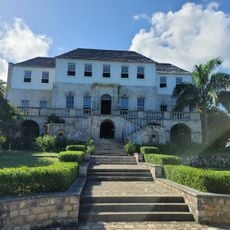
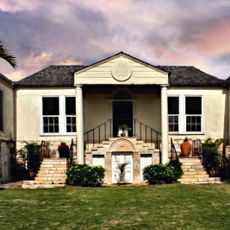
Carmel Moravian Church stands on a hilltop 1.5 miles (2.4 km) west of Newmarket, Westmoreland. The church is a cut stone and mortar structure 120 feet (37 m) long and 72 feet (22 m) wide at the transept, with a large masonry belfry to the south topped by a wooden cupola holding one bell. A 20th-century manse of rendered breeze blocks with a zinc roof stands nearby, and a primary and infant school lies a little downhill to the west, opposite the main entrance.
The Scotts, local planters, chose the hilltop site in 1826 and built a road to a temporary building; the church itself was founded in 1827, when John Scholefield became first minister and work began on a permanent church completed in 1828. Enlarged in 1859, it reached 120 feet long and 72 feet wide at the transept.
The Moravian cemetery north of the church, called God's Acre, covers about 1,700 m² and is only sparsely used. Archibald Monteith, an African-born ex-slave known as 'Aneaso' who later wrote an autobiography, is among the notable members associated with Carmel.
The church stands on a hilltop reached by a road the Scotts built up to the site in 1826, about 2.4 km (1.5 miles) west of Newmarket. The primary and infant school lies a little downhill to the west, opposite the main entrance, and the God's Acre burial ground runs downhill to the north of the church.
Archibald Monteith, an African-born ex-slave known as 'Aneaso', was a member of the Carmel congregation and later wrote an autobiography. His account is one of the few first-person narratives by a formerly enslaved person in Jamaica, and it connects the hilltop church to the people the Scotts originally built it to teach.
The community of curious travelers
AroundUs brings together thousands of curated places, local tips, and hidden gems, enriched daily by 93,942 contributors worldwide.