Santo Tomás Cave, karst cave system near El Moncada, Pinar del Río Province, Cuba
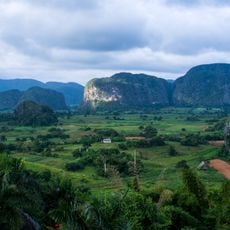
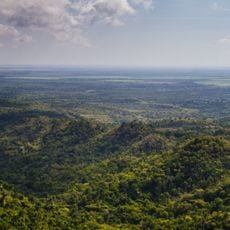
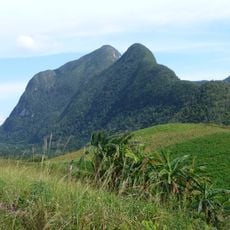
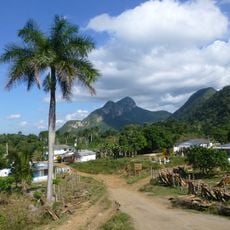
Santo Tomás Cave is a karst system cut into a mogote in the Sierra de Quemado, part of the Sierra de los Órganos, 18.6 km southwest of Viñales near the village of El Moncada. Its 44.6 km of known galleries are arranged in seven levels between 125 and 190 m in altitude, a 65 m span. The lowest level still carries the Santo Tomás stream, which sinks underground in the Santo Tomás valley and reappears 2 km later in the Quemado valley. Named chambers include the Salón del Caos, known for huge fallen blocks, and the Cueva de las Perlas.
The cave yielded prehistoric remains: engravings in the cueva de Mesa and a human skeleton about 3,500 years old in the cueva de la Incógnita. Gerardo Mosquera suggested in 1983 that the petroglyphs of the García Valdés hall were of African workmanship, but later work on the caves of Mesa, los Petroglifos, la Iguana and la Cachimba established a pre-Columbian origin. The site was declared a National Monument in 1989.
Farmers in the area traditionally collected guano from the cave to use as fertilizer for their tobacco crops. This practice connected the cave directly to local agriculture and daily life.
Visitors can only explore the first three levels with certified guides, as the cave is protected as a National Monument. The tours require basic fitness, so visitors should prepare for the physical demands beforehand.
The lowest level is still active: the Santo Tomás stream enters from the Santo Tomás valley and resurfaces 2 km later in the Quemado valley. A 2014 analysis found bacterial counts fell from 910 CFU/ml at the sinkhole to 217 CFU/ml at the resurgence.
The community of curious travelers
AroundUs brings together thousands of curated places, local tips, and hidden gems, enriched daily by 92,888 contributors worldwide.