Flagstaff Gardens, Urban park in West Melbourne, Australia
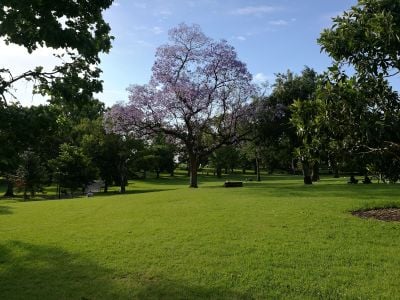
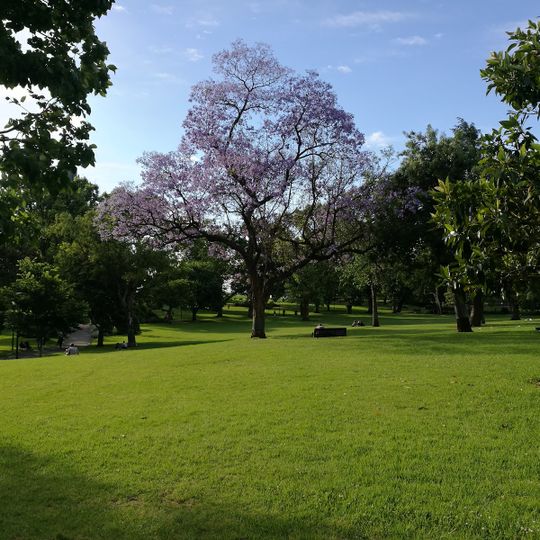
Flagstaff Gardens is a 7.2-hectare park bounded by William, La Trobe, King and Dudley streets in Melbourne's city centre. Its southern end is planted with deciduous trees and its northern end with mature eucalypts, and avenues of elms line the paths alongside several large Moreton Bay figs. The north corner holds a bowling lawn and rose beds, while tennis courts along William Street double as volleyball, handball and netball courts.
The park was established in 1862 and was one of Melbourne's earliest green spaces. It takes its name from a flagstaff erected in 1840 that served as a signal point between the city and incoming vessels.
The hill was called Brejerrenywun by the Boonwurrung and Woiwurrung, and the gardens' name comes from the 1840 flagstaff used to signal ships in the Port of Melbourne. On 11 November 1850 a bonfire and about 5,000 people marked Victoria's separation from New South Wales here. Today office parties use the electric barbecues in December, and memorials and sculptures stand on the lawns.
The gardens are bounded by William, La Trobe, King and Dudley streets, with the Flagstaff railway station entrance at the southeast corner and the Queen Victoria Market across William Street to the northeast. Paths run through elm avenues and past large Moreton Bay figs, and the slope of the old hill is eased by a bluestone retaining wall along King Street. Tennis courts along William Street double as volleyball, handball and netball courts, and electric barbecues nearby are busy with office parties in December.
The park is home to Australian possums that have become accustomed to visitors and live in the trees throughout the site. This native wildlife presence in the heart of the city creates an experience not commonly found in other urban parks.
The community of curious travelers
AroundUs brings together thousands of curated places, local tips, and hidden gems, enriched daily by 93,766 contributors worldwide.