Lake George, Endorheic lake in Queanbeyan-Palerang, Australia
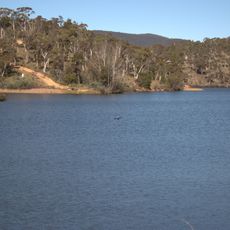
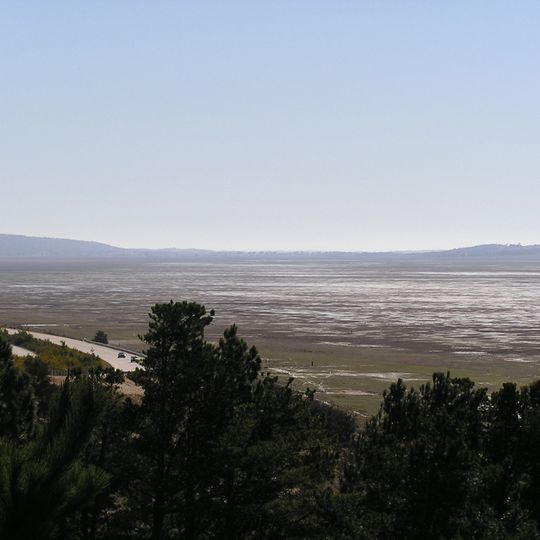
Lake George is an endorheic lake in the Queanbeyan-Palerang region that spans 25 kilometers in length and 10 kilometers at its widest point. Water depth varies between 1.5 and 4.5 meters depending on rainfall and seasonal conditions.
The lake formed when crust movement along a fault line raised the Lake George Escarpment, blocking streams that had drained into the Yass River; it is believed to be over a million years old. Sediment beneath the lake exceeds 250 metres, drilled by the Bureau of Mineral Resources in the summer of 1982/83, with the oldest sediments dated at 4–5 million years. Its foreshore lies mainly within the traditional lands of the Gundungarra, with the south-western shore at the eastern edge of Ngunnawal country.
The lake lies mainly within the traditional lands of the Gundungarra people, with its south-western foreshore at the eastern edge of Ngunnawal country; the two groups spoke a very similar, if not identical, language. The lake is also known as Weereewa or Ngungara in the Ngunnawal language. Canberra artist Rosalie Gascoigne made works such as Pale landscape 1977 and Feathered fence 1978–79 using thousands of swan feathers collected at the lake's southern end.
The area is best explored on foot or by car, with access points available from several directions around the perimeter. Visitors should expect seasonal variations in weather and water levels that affect what you can see and do.
Canberra artist Rosalie Gascoigne made several works from thousands of swan feathers collected at the lake's southern end in the mid-1970s, including Pale landscape 1977 and Feathered fence 1978-79. The swans left after the lake dried. In 2010, Alan and Julie Aston placed zebra sculptures beside the highway stop, named Stopper, Reviver, Survivor and Dasher.
The community of curious travelers
AroundUs brings together thousands of curated places, local tips, and hidden gems, enriched daily by 94,109 contributors worldwide.