Langshaw Marble Lime Works, Industrial heritage site in New Farm, Queensland, Australia
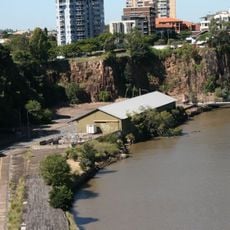
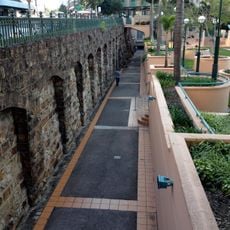
Langshaw Marble Lime Works is a heritage-listed ruin at 12 Julius Street, New Farm, consisting of two D-shaped intermittent lime kilns built into the Brisbane River embankment. The southern set survives: one kiln of stone, likely older, and one of brick, probably fired alternately so one could cool while the other burned. Limestone and fuel were layered from above and burnt for three days at 1,000 degrees Celsius.
James Campbell established the works between 1878 and 1881, turning it into a major supplier of building materials for the growing Brisbane region. The operation benefited from the construction boom of that era and helped supply local building projects.
The lime works demonstrates how local industry supported Brisbane's expansion and provided employment for workers in the region. It reflects the role that small manufacturing played in building the early city.
The ruins are located on a residential property on Julius Street and are visible from outside, though entering may require caution. It is best to visit during daylight and be prepared for uneven ground.
The kilns used a layering system where limestone and fuel were stacked alternately to maximize heat usage. This method allowed for steady production and made the operation economically efficient.
The community of curious travelers
AroundUs brings together thousands of curated places, local tips, and hidden gems, enriched daily by 94,771 contributors worldwide.