Kilbourne Hole, Volcanic crater in Doña Ana County, New Mexico, US.
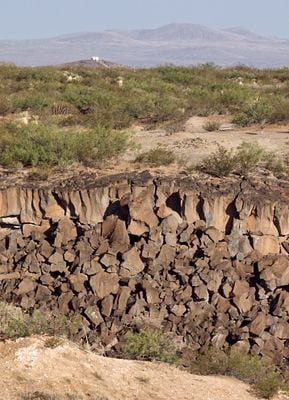
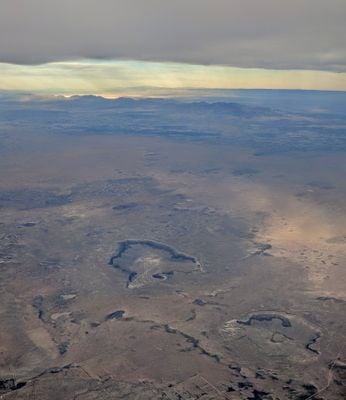
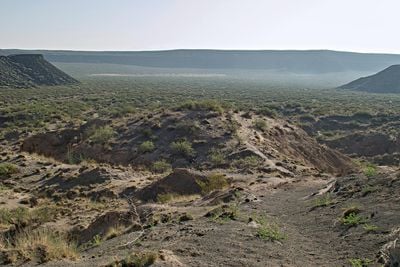
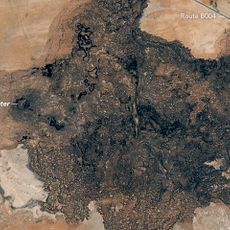
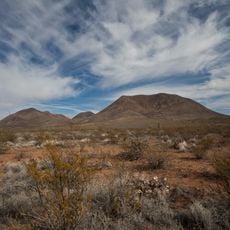
Kilbourne Hole is a large elliptical basin formed by volcanic activity in the New Mexico desert. The depression sinks several hundred feet deep into the earth and measures roughly 1.7 miles along its length and over a mile across its width.
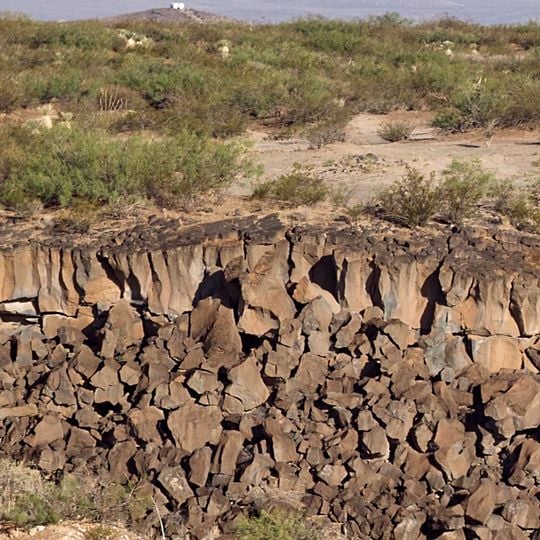
The basin formed thousands of years ago when volcanic eruptions brought hot material from deep within the earth to the surface. Federal authorities recognized its geological importance and protected it as a National Natural Landmark in 1975.
NASA trained Apollo astronauts here in April and November 1969, June 1970, and January and December 1971. Among them were Pete Conrad, Alan Shepard, David Scott, John Young and Gene Cernan, who practised recognising volcanic rocks for lunar fieldwork. In 2017 a NASA team returned to test instruments for future missions, with Jack Schmitt and astronaut Barry Wilmore taking part in simulated moonwalks.
The site sits in a remote desert area and can be viewed from nearby vantage points, though some sections of the land are privately owned. It is wise to check with local authorities before planning a visit to understand which areas are open to the public.
Most mantle xenoliths here are lherzolite, an olivine-rich rock in which pale green olivine carries black flecks of pyroxene; wehrlite also occurs. Deep-crust samples include charnockite and anorthosite granulites that reached the surface in under three days and retain textures from 1.6 to 1.8 billion years ago. The xenoliths are most abundant on the northern and eastern rim.
The community of curious travelers
AroundUs brings together thousands of curated places, local tips, and hidden gems, enriched daily by 93,785 contributors worldwide.