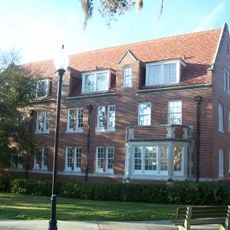
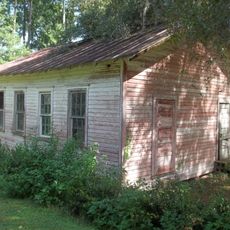
Haile Homestead, Historic plantation house in Gainesville, United States
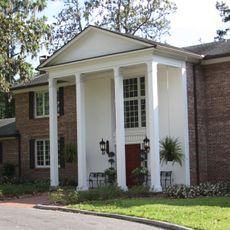
The Historic Haile Homestead, also called Kanapaha, is a one-story house built in 1856 of yellow pine with cypress siding. Four-foot-tall piers of mortared limestone rock support a foundation of 100-foot-long beams. Skilled carpenter Billy Watts supervised most of the construction, and stonemason Henry Gaines built the fireplaces, chimneys and support piers.
Thomas Evans Haile and his wife Esther "Serena" Chesnut Haile moved from Camden, South Carolina, to Alachua County in 1854 and established the 1,500-acre Kanapaha cotton plantation. The house was built in 1856. The family survived bankruptcy in 1868 and turned the property into a farm growing fruit and vegetables, including oranges. After 1900 the house sat vacant for decades.
The name Kanapaha means "small thatched houses" in the language of the Seminole people. Fifty-six enslaved people lived in one-room frame houses on the plantation; their descendants and the Haile family are both represented in the visitors center opened in 2017.
The property can be visited on weekends and is easily accessible to guests. It is advisable to check in advance whether tours are available and how much time to plan for a visit.
The walls of the house carry more than 12,500 handwritten words by the Haile family and friends, dating from the 1850s. The reason for the writing is unknown. The house is also supported by four-foot-tall piers of mortared limestone rock, built by stonemason Henry Gaines.
The community of curious travelers
AroundUs brings together thousands of curated places, local tips, and hidden gems, enriched daily by 93,586 contributors worldwide.