Pinckney Island National Wildlife Refuge, Wildlife refuge in Beaufort County, United States.
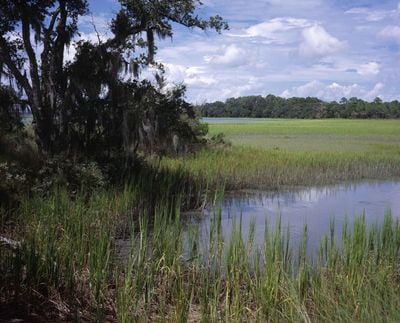
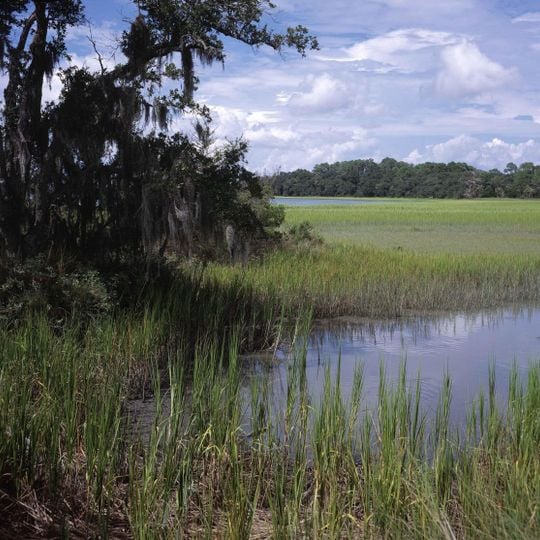
Pinckney Island National Wildlife Refuge covers 4,053 acres between the South Carolina mainland and Hilton Head Island. Pinckney Island, the largest of its islands and the only one open to the public, holds saltmarsh, tidal creeks, forestland, brushland, fallow fields and freshwater ponds; about 67% of the refuge is salt marsh and tidal creek. From the entrance, a narrow channel of dark water curves past tall reeds into a flat expanse of low green marsh grass that reaches a line of dark trees, with a strip of pale blue water beyond.
Charles Pinckney purchased the land in 1736 and transformed it into a plantation worked by enslaved labor over the following centuries. The site was inhabited long before European arrival, with evidence of human presence dating back thousands of years to the Archaic period.
The refuge takes its name from Major General Charles Cotesworth Pinckney, a Revolutionary War commander and signer of the U.S. Constitution. A cemetery on the northwest side of Pinckney Island holds five headstones of U.S. Colored Troops, soldiers recruited locally for the Union Army. Visitors today walk the same island where Sea Island cotton was grown by more than 200 enslaved people by 1818.
The refuge is open from sunrise to sunset year-round and offers more than 10 miles of paths for hiking, biking, and viewing wildlife. Visitors should come prepared for changing weather and bring insect protection, especially during warmer months.
The refuge serves as a critical nesting ground for colonial wading birds such as ibises, egrets, and herons that gather in natural rookeries. These bird communities use the area each breeding season, making it a priority spot for bird watchers.
The community of curious travelers
AroundUs brings together thousands of curated places, local tips, and hidden gems, enriched daily by 92,735 contributors worldwide.