Medway, Historic building in South Carolina, US
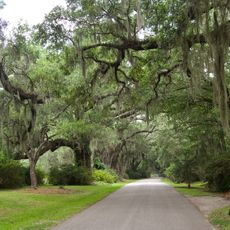
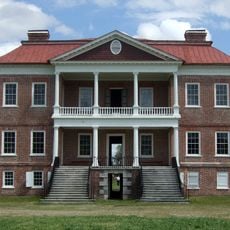
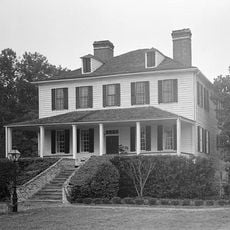
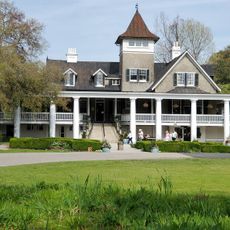
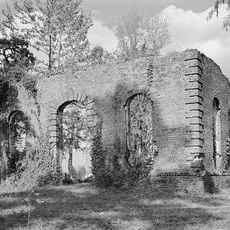
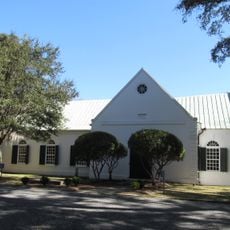
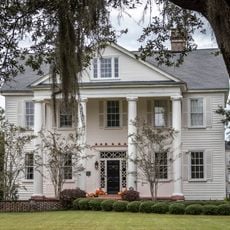
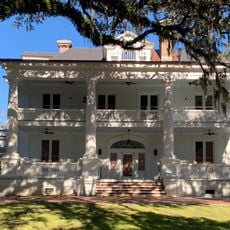
Medway is a plantation house near Mount Holly, Berkeley County, South Carolina, reached about 2 mi east of U.S. Route 52. Its core is handmade local brick, patched with oyster-shell stucco, with stepped Dutch gables rebuilt in 1906. Theodore Samuel DuBose added a storey in 1827, making it a 2+1⁄2-storey house, and Peter Gaillard Stoney added an unsymmetrical west wing in 1855.
Jan Van Arrsens, Seigneur of Wernhaut, brought settlers from Holland around 1686 and built his house on the Back River, then called the "Meadway" or "Medway". That house burned, possibly in 1692, and was rebuilt on its surviving foundations; bricks bearing the Hyrne family seal, found in 1984, show Edward Hyrne took part in the rebuilding after he bought the plantation in 1701. Theodore Samuel DuBose added a storey in 1827, Peter Gaillard Stoney built a west wing in 1855, and the house was listed on the National Register on July 16, 1970.
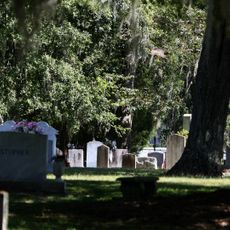
Medway's name comes from the old name of the Back River, once called the "Meadway" or "Medway", a tributary of the Cooper River. The plantation's clay was worked into "Carolina Grey" bricks, some of which went into buildings in Charleston and Fort Sumter. John Bennett set his novel The Treasure of Peyre Gaillard here, and Gertrude Sanford Legendre, the first American woman captured in World War II, is buried on the grounds.
Access to the building may be limited, so reaching out to local authorities or the State Historic Preservation Office beforehand is wise. Visitor information and site conditions can be obtained through official channels.
The Hyrne family seal, impressed into bricks around a doorframe, was only found in 1984; it showed Edward Hyrne helped build the original house, contradicting the tradition that Jan Van Arrsens built its core alone.
The community of curious travelers
AroundUs brings together thousands of curated places, local tips, and hidden gems, enriched daily by 94,746 contributors worldwide.