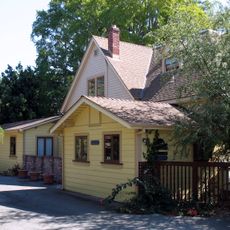
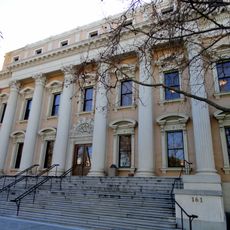
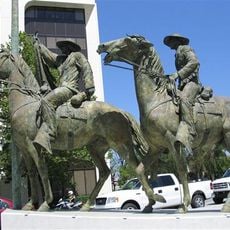
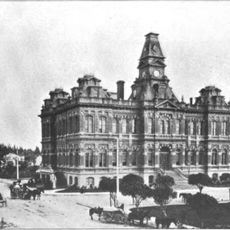
Chinatown in San Jose, Historical Chinese district in San Jose, US
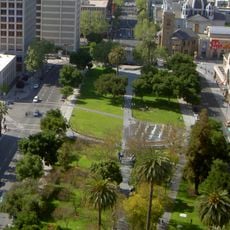
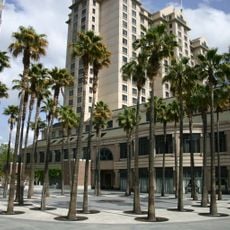
Chinatown in San Jose is not a standing district: the city had five Chinese enclaves between 1866 and 1931, and none survives. The first stood at the southwest corner of Market and San Fernando streets, near today's Circle of Palms Plaza; the largest, the second Market Street Chinatown, covered most of the block along Market Plaza between San Fernando and San Antonio. Its artifacts, excavated in the 1980s, are catalogued by Stanford University.
San Jose had multiple Chinese districts between 1860 and 1930 as the Chinese population moved from one location to another. The Market Street area became the second largest Chinese district in California and shaped the city's history over decades.
The name Heinlenville came from John Heinlen, the German-American landowner who leased a 5-acre pasture for the community in 1887 despite threats and denied permits. The enclave held merchants, barbers, herbalists and the Taoist Ng Shing Gung temple, and drew Japanese migrants who formed a Japantown on Sixth Street. Its site is now San Jose's Japantown.
The district sits near public transportation lines and has parking available, making it easy to explore on foot. Visitors can walk through the streets and navigate between restaurants and shops without difficulty.
A museum in the area preserves rare artifacts from the early Chinese settlement, including a gilded altar from 1892. These items show the religious and craft traditions that generations of immigrants brought with them.
The community of curious travelers
AroundUs brings together thousands of curated places, local tips, and hidden gems, enriched daily by 93,042 contributors worldwide.