San Pablo Bay National Wildlife Refuge, National wildlife refuge in Solano County, United States
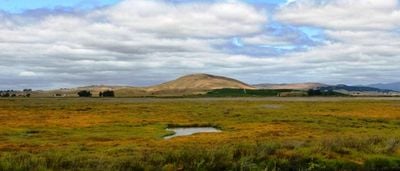
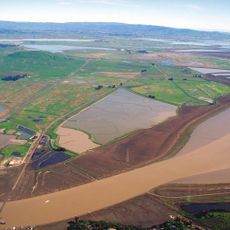
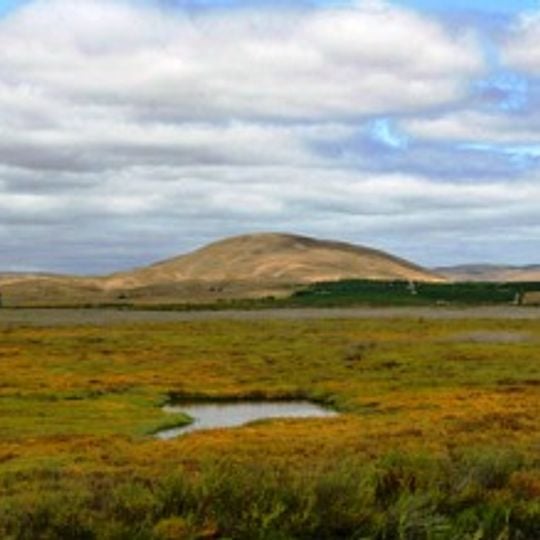
San Pablo Bay National Wildlife Refuge is a 13,190-acre refuge along the northern shore of San Pablo Bay, running from the Petaluma River mouth past Tolay and Sonoma creeks to Mare Island. Its pickleweed-dominated tidal marsh, the largest continuous patch left in the northern bay, gives way to open water, mudflats and a low rounded hill beyond a band of trees.
The refuge was established in 1970 to protect the remaining wetlands in this region. This action came after human development had already destroyed or altered 85% of the original tidal marsh system that once dominated the area.
The refuge's pickleweed tidal marsh supports the largest wintering population of Canvasbacks on the west coast, alongside millions of migratory shorebirds and waterfowl. Birders time visits to the Tolay Creek Tubbs Island Trail for these winter gatherings. The endangered Ridgway's Rail and salt marsh harvest mouse live here year-round.
The Tolay Creek Tubbs Island Trail offers the main way to explore the refuge and is accessible from sunrise to sunset every day. Wear sturdy footwear since the ground can be muddy and soft, especially near water areas.
The refuge hosts the largest wintering population of Canvasback ducks on the entire west coast of North America. These ducks migrate from the north to spend the cold months here, taking advantage of the abundant food sources.
The community of curious travelers
AroundUs brings together thousands of curated places, local tips, and hidden gems, enriched daily by 92,787 contributors worldwide.