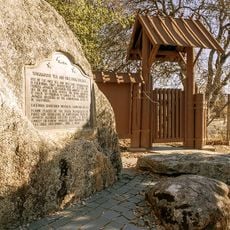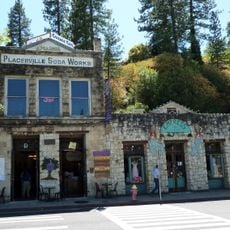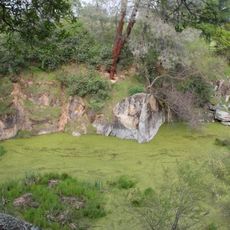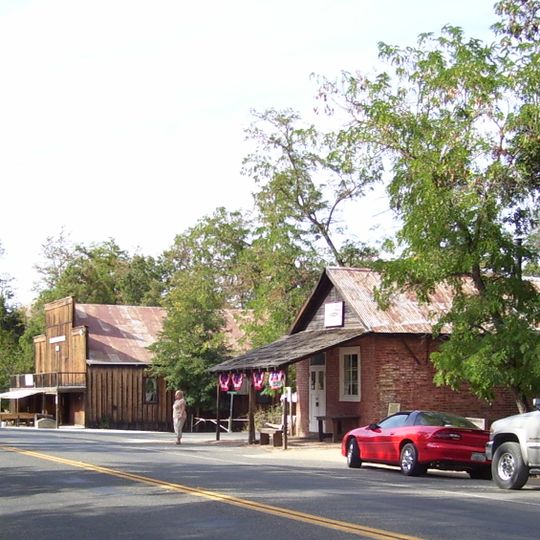
Coloma, Historic gold mining settlement in El Dorado County, California.
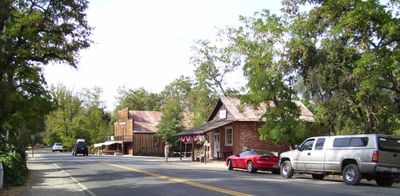
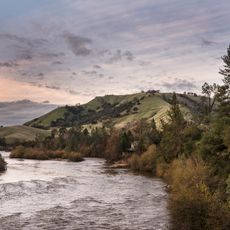
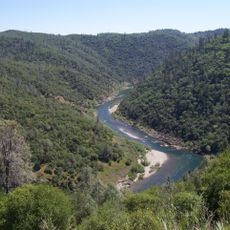
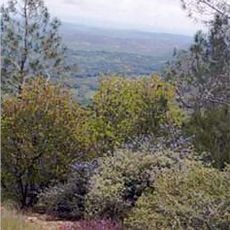
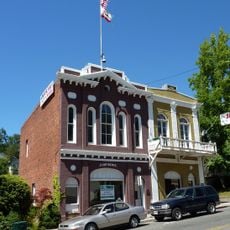
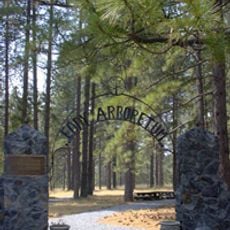
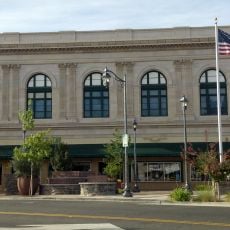
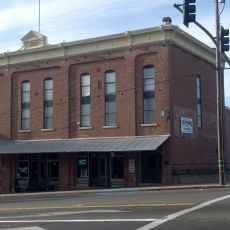
Coloma is a historic settlement in El Dorado County, California, where James W. Marshall discovered gold flakes in 1848, triggering the events that would reshape the region. The village sits in a wooded valley along the South Fork American River and displays restored buildings from the mining era.
Marshall's discovery of gold in January 1848 unleashed a wave of migration that rapidly populated the region and changed its future. The mining settlement grew quickly as fortune seekers arrived, eventually fading as the rush moved to other parts of California.
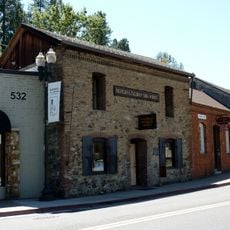
The settlement became the epicenter of the California Gold Rush, drawing people from around the world seeking fortune and new beginnings. The buildings and artifacts visible today reflect the lives of fortune seekers who arrived hoping to change their destinies.
The site is best explored on foot, with most buildings and exhibits arranged within a compact area easy to navigate. Wear comfortable shoes and plan to spend several hours wandering through the museums and seeing how the settlement was laid out.
A large gold nugget weighing about 12 pounds (5.5 kg) discovered by miners in 1854 remains one of the most impressive specimens ever found in this area. This discovery shows that even years after the initial rush, significant amounts of gold could still be found nearby.
The community of curious travelers
AroundUs brings together thousands of curated places, local tips, and hidden gems, enriched daily by 91,563 contributors worldwide.