Cascadia subduction zone, Major seismic fault zone along Pacific Coast, United States and Canada
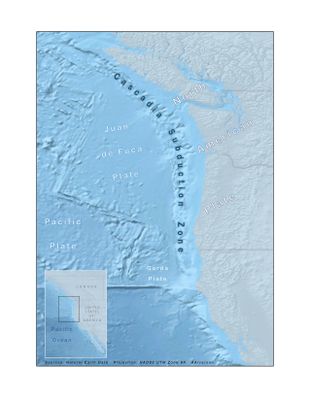
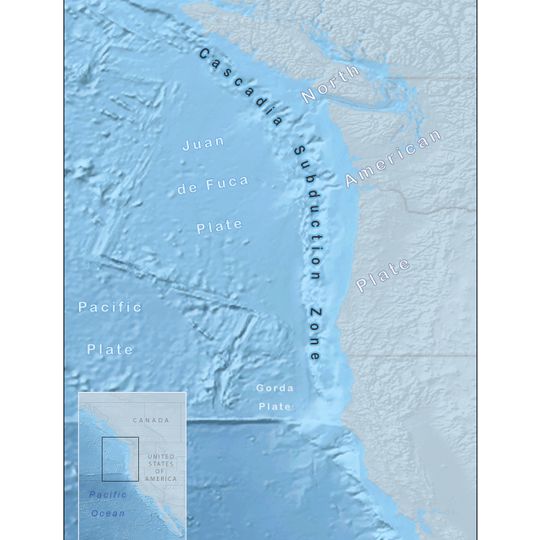
The Cascadia subduction zone is a major fault between two tectonic plates beneath the Pacific Ocean floor off the North American coast, running from northern California through to British Columbia. The zone marks the boundary where the Juan de Fuca plate slides under the North American plate and extends roughly 700 miles in length.
On January 26, 1700, a magnitude 9 earthquake struck here, with effects reaching across to Japan and prompting records there of arriving tsunami waves. Indigenous peoples along the coast preserved accounts of the event through generations, which later matched scientific data.
Indigenous peoples of the Pacific Northwest preserved knowledge of past earthquakes through oral traditions, documenting land changes and ocean patterns.
Scientists monitor this fault continuously using sensors along the coast to track movements in the crust. The collected data helps regional authorities develop evacuation plans and early warning systems for communities along the Pacific coastal region.
Along the coast stand what are called ghost forests with dead tree stumps that sank below sea level during the last major earthquake. These preserved remains show clearly how the land dropped abruptly during earlier events, in some areas settling several meters lower than before.
The community of curious travelers
AroundUs brings together thousands of curated places, local tips, and hidden gems, enriched daily by 60,000 contributors worldwide.