Boring Lava Field, Volcanic field in Portland metropolitan area, United States.
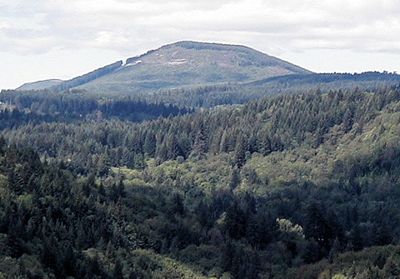
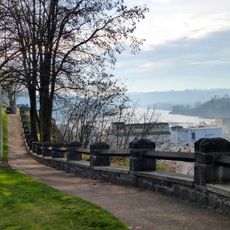
The Boring Lava Field is a volcanic region in the Portland area that spreads across parts of Oregon and Washington, marked by numerous cinder cones, shield volcanoes, and lava flows. Most formations sit beneath forests, though some peaks like Powell Butte and Mount Tabor have been developed as parks where trails reveal the geological features.
Volcanic activity created this field roughly 2.7 million years ago through repeated cycles of eruptions over vast timescales. The most recent known eruption happened at Beacon Rock about 57,000 years ago, making this one of the younger volcanic landscapes in the region.
The field's name comes from the town of Boring, Oregon, 12 miles (20 km) southeast of downtown Portland, which sits at the edge of the densest cluster of vents. Geologist R. Treasher applied the term "Boring Lava" to the local deposits in 1942, and in 2002 accumulated geochemical and geochronological data led to their designation as the Boring Lava Field. The grouping is informal, based on similarities in age and lithology.
The area is open year-round, with hiking trails available at Powell Butte Nature Park and Mount Tabor Park to explore the volcanic features. Most of the terrain is forested and can become slippery when wet, so sturdy footwear is important for safe exploration.
The field's deposits were named "Boring Lava" by R. Treasher in 1942, after the town of Boring, Oregon, 12 miles (20 km) southeast of downtown Portland. In 2002, as geochemical and geochronological data accumulated, the deposits were grouped into the larger Boring Lava Field, a grouping based on similarities in age and lithology.
The community of curious travelers
AroundUs brings together thousands of curated places, local tips, and hidden gems, enriched daily by 93,789 contributors worldwide.