Willamette River Light, Historical lighthouse at confluence of Willamette and Columbia Rivers, Portland, US.
Willamette River Light was a one-and-a-half-story octagonal wood-frame lighthouse with five rooms, built on wooden pilings off the northern end of what is now Kelley Point. Designed by architect Carl W. Leick, it showed a fixed red light 23 feet above the water from a small oil lantern on a platform, and sounded a 1,200-pound fog bell every ten seconds.
The lighthouse was constructed in 1895 to improve navigation at the difficult river junction. It remained in operation until 1935, when automation made its continuous staffing no longer necessary.
The station's fog signal was a 1,200-pound bell struck once every ten seconds by a No. 3 Gamewell mechanism, a sound river pilots listened for at the mouth of the Willamette. After automation around 1935, the empty dwelling was sold as office space to the Portland Merchants Exchange, which in 1946 had it moved by crane to Kelley Point Beach and used it as a watchtower to report incoming vessels to its downtown office.
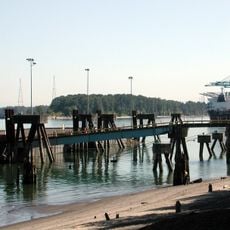
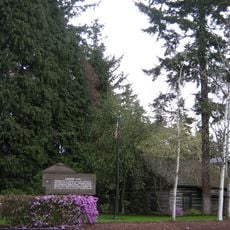
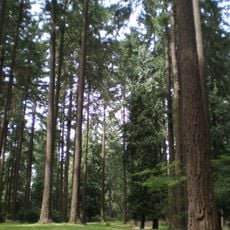
The remains are located in Kelley Point Park, where visitors can view the old wooden pilings from the shore areas. The site is easily accessible and offers good views of the river junction, especially during high water periods.
The abandoned dwelling was sold to the Portland Merchants Exchange and in 1946 moved by crane to lower pilings on Kelley Point Beach, where it served as a watchtower reporting incoming vessels to the office downtown. The structure burned on the evening of June 13, 1959; only broken wooden pilings remain in the water near Kelley Point Park.
The community of curious travelers
AroundUs brings together thousands of curated places, local tips, and hidden gems, enriched daily by 93,808 contributors worldwide.