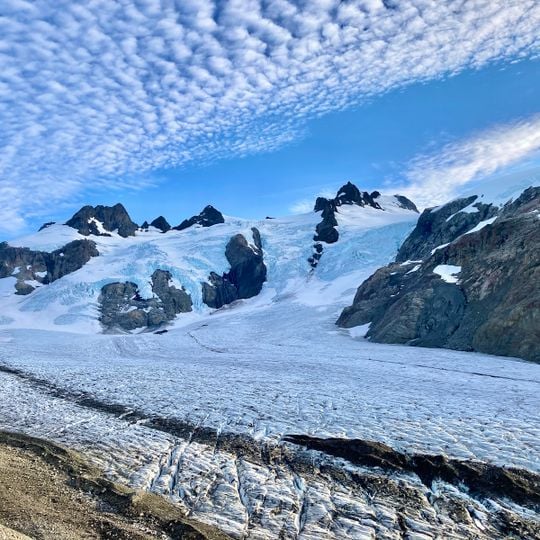
Mount Olympus, Mountain summit in Olympic National Park, Washington, US
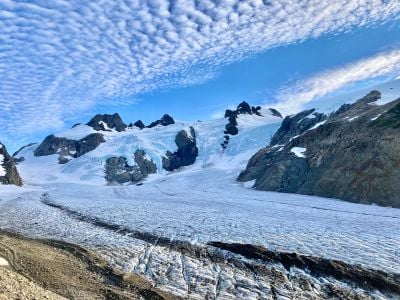
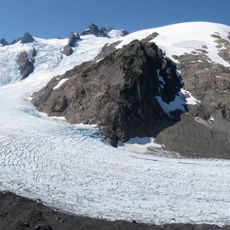
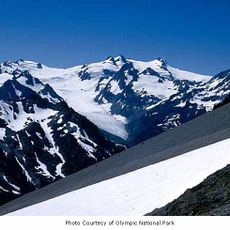
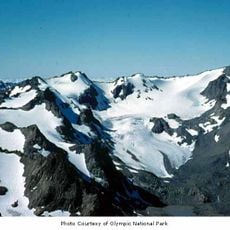
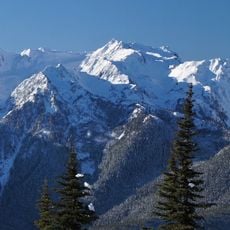
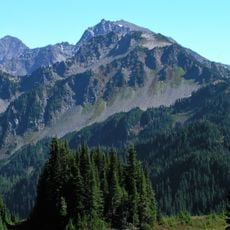
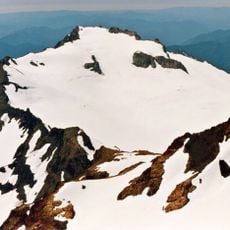
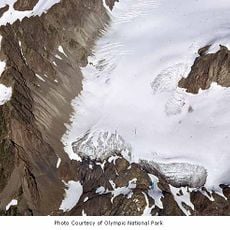
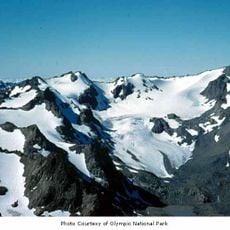
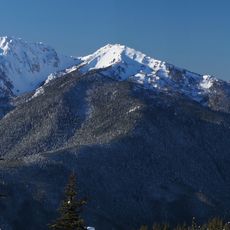
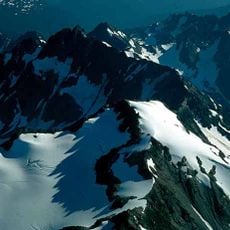
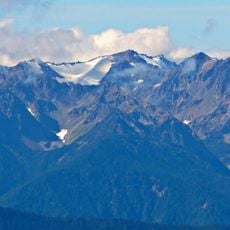
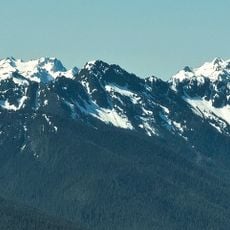
Mount Olympus is the highest summit of the Olympic Mountains, rising to 7,980 feet (2,430 m) in Olympic National Park. Its upper slopes are snow and ice, with dark grey rock faces and jagged ridges breaking through. A long pale blue glacier flows down a central valley from the upper snowfields toward the lower left.
Spanish explorer Juan Pérez named the peak Cerro Nevado de Santa Rosalía in 1774, the first European naming of a geographic feature in present-day Washington. John Meares gave it the name Mount Olympus in 1788. In 1890 an expedition led by Joseph P. O'Neil reached the summit, presumed to be the southern peak. On 13 August 1907 L.A. Nelson and ten other climbers made the first ascent of the highest, western summit; part of the group had reached the lower eastern peak the day before.
The Duwamish considered Mount Olympus the home of a thunderbird that made lightning and rain, and avoided the area. The name Sunh-a-do, recorded for the Olympian Mountains, is sometimes wrongly given as the mountain's Native American name. The present name comes from British explorer John Meares in 1788.
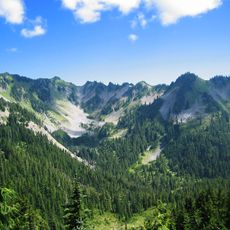
Climbing this summit requires good physical fitness and preparation, as the approach involves long hikes through changing forest terrain. It helps to research trailheads and current route conditions well before planning your visit.
Mount Olympus has three summits: the west peak is highest at 2,432 m, the middle peak reaches 2,417 m and the east peak 2,366 m. Part of the 1907 expedition had already stood on the lower east summit the day before, and the lowest middle summit had been climbed earlier still.
The community of curious travelers
AroundUs brings together thousands of curated places, local tips, and hidden gems, enriched daily by 93,466 contributors worldwide.