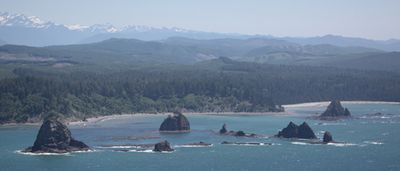
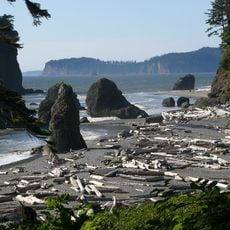
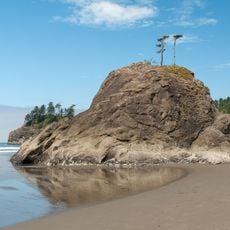
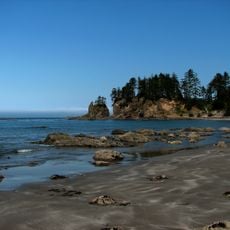
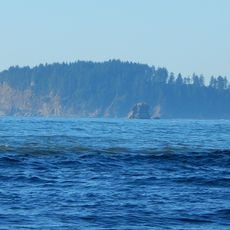
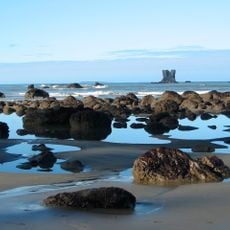
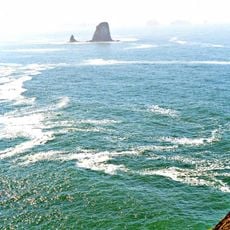
Quillayute Needles National Wildlife Refuge, Marine wildlife sanctuary along Washington coast, US.
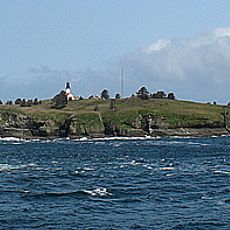
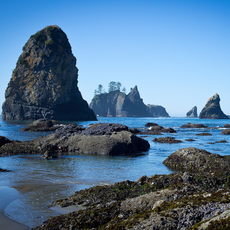
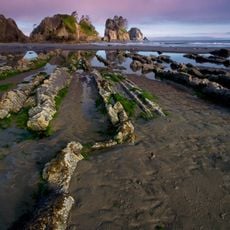
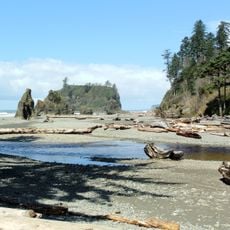
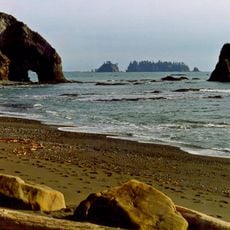
Quillayute Needles National Wildlife Refuge covers 300.2 acres of islands, rocks and reefs off Washington's coast between latitudes 47°38′ and 48°02′ North. It is one of three refuges forming a chain of 870 islands, rocks and reefs running more than 100 miles from Cape Flattery to Copalis Beach, part of the Washington Islands Wilderness. The rocks are closed to the public, with a 200-yard buffer around each.
President Theodore Roosevelt established this refuge in 1907, making it one of the nation's earliest protections for seabird breeding grounds. This decision reflected growing recognition of the need to safeguard these critical nesting sites.
James Island was removed from the refuge in 1966 after it was found to lie within the Quileute Indian Reservation, and it was returned to the Quileute. The tribe's villages and reservation sit at the mouth of the Quillayute River near La Push, south of the refuge rocks.
The three refuges of the Washington Islands Wilderness, including Quillayute Needles, are closed to the public; wildlife is watched only from boats or the mainland, and a 200-yard buffer surrounds each island. Tatoosh, James and Destruction islands lie outside the wilderness. The wilderness covers 1.8 square kilometres of land within over 780 square kilometres of ocean.
The three refuges of Flattery Rocks, Quillayute Needles and Copalis together form the Washington Islands Wilderness, created in 1970, covering 1.8 square kilometres of land within over 780 square kilometres of ocean. Each island is surrounded by a 200-yard buffer, and only Tatoosh, James and Destruction islands lie outside the wilderness.
The community of curious travelers
AroundUs brings together thousands of curated places, local tips, and hidden gems, enriched daily by 93,774 contributors worldwide.