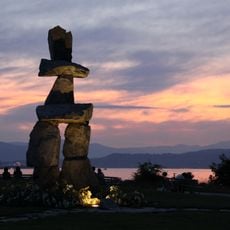
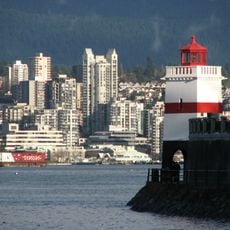
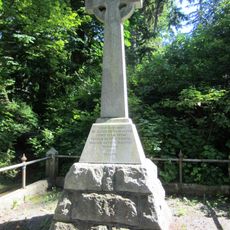
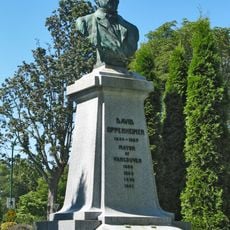
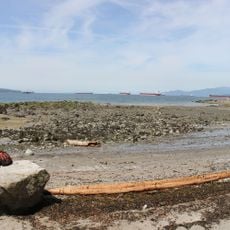
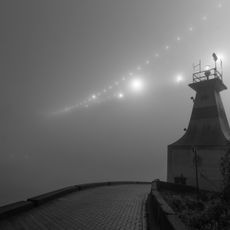
Siwash Rock, Historical islet in Stanley Park, Vancouver, Canada.
Siwash Rock is a basalt sea stack in Stanley Park rising 15 to 18 metres above the water, known to early mariners as Nine Pin Rock for its bowling-pin shape. It is the only such sea stack in the Vancouver area. The small Douglas fir that once grew on top died in the dry summer of 1965; new saplings were later established.
This basalt column formed about 32 million years ago when volcanic activity pushed basalt through a fissure in the Earth. The material resisted erosion better than the surrounding rock, leaving this striking structure behind.
The Squamish name is Slhx̱i7lsh, linked to a story of a man transformed by X̱ays; Andrew Paull said the hole in the rock held his fishing tackle. Pauline Johnson retold the legend in Legends of Vancouver as a monument to Clean Fatherhood, and a plaque nearby calls the figure Skalsh the unselfish, transformed by Q'uas. The name Siwash comes from Chinook Jargon, from French sauvage, and is considered derogatory by some; in 2017 commissioner Catherine Evans moved to rename the rock Slhx̱í7lsh.
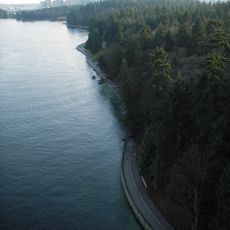
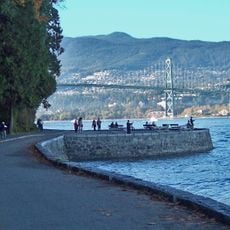
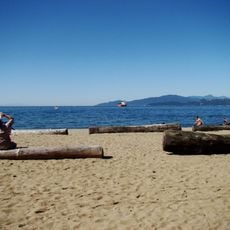
You can view this rock formation while walking or cycling along the Stanley Park Seawall as you explore the waterfront. The nearest parking is at Third Beach, making it easy to access the seawall and reach this spot.
The lookout on the cliff above the rock, reached from the Siwash hiking trail, was called "Fort Siwash" during the wars: an artillery battery was mounted there in the First World War, and searchlights followed in the Second. The small Douglas fir atop the rock, long a landmark for early Vancouverites, died in the dry summer of 1965; new saplings took root less than three years later.
The community of curious travelers
AroundUs brings together thousands of curated places, local tips, and hidden gems, enriched daily by 93,911 contributors worldwide.