Bryce Canyon National Park, National park in Garfield and Kane counties, Utah, United States
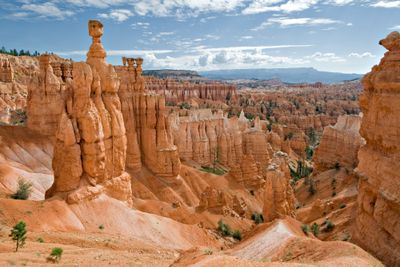
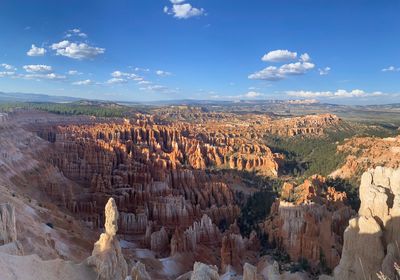
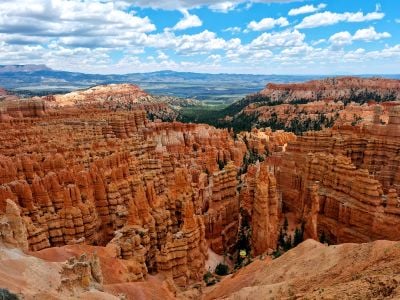
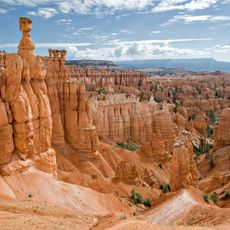
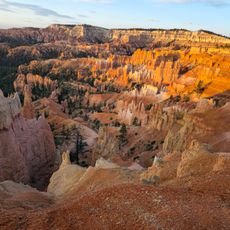
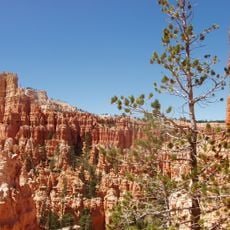
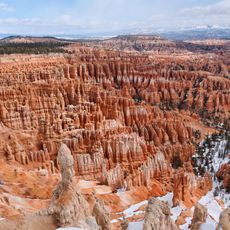
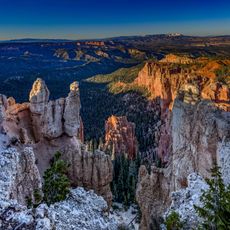
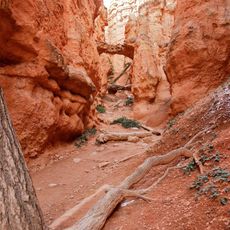
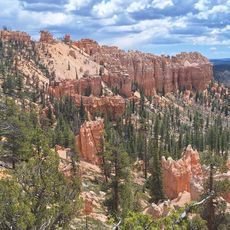
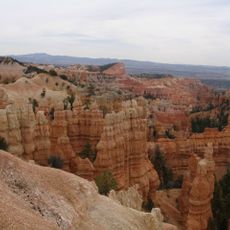
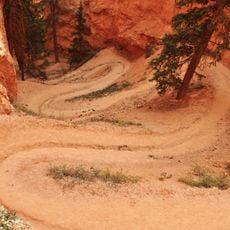
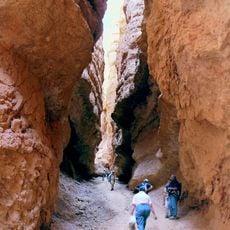
Bryce Canyon National Park is a national park in Kane County, Utah, known for its densely packed limestone pinnacles called hoodoos. The terrain stretches along a series of natural amphitheaters, with the largest formation roughly 12 miles (19 kilometers) long and featuring thousands of pointed spires shaped by frost and water.
Ebenezer Bryce, a Mormon pioneer and carpenter, settled below these cliffs in 1875 and built an irrigation canal for his livestock. The area received monument status in 1923 and was formally declared a national park five years later in 1928.
The Paiute called the hoodoos Anka-ku-was-a-wits, meaning "red painted faces", and told of the Legend People whom Coyote turned to stone for their bad deeds. The name Paunsaugunt comes from their language and means "home of the beaver".
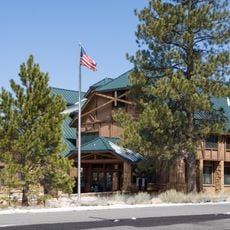
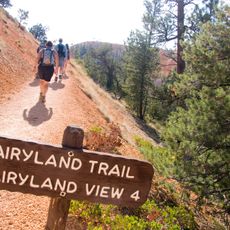
The main entrance sits on Highway 63, roughly half an hour south of Panguitch, while the elevation between 8000 and 9000 feet (2400 to 2700 meters) means hikers should bring clothing for cooler temperatures. A vehicle is useful because viewpoints are spread along a scenic drive, but free shuttles connect several popular trailheads during summer months.
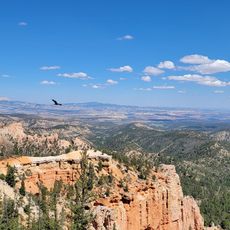
Despite carrying the name canyon, it is not technically a canyon but rather a series of notches along the edge of a high plateau. The extreme elevation causes more than 200 freeze-thaw cycles per year on average, making the rock formations erode faster than in most other areas of the American Southwest.
The community of curious travelers
AroundUs brings together thousands of curated places, local tips, and hidden gems, enriched daily by 92,100 contributors worldwide.