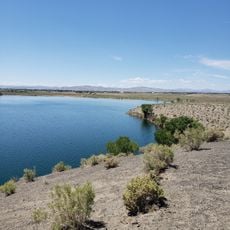
Carson Sink, Dry lake bed in Churchill County, Nevada, United States
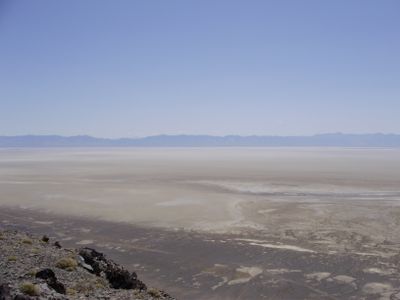
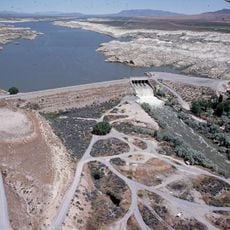
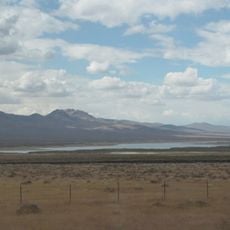
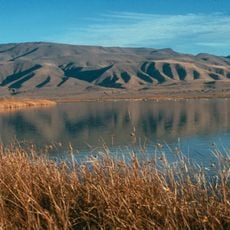
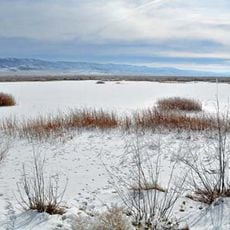
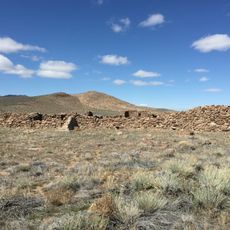
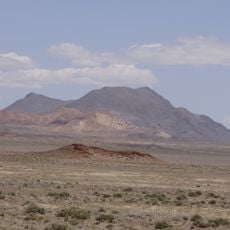
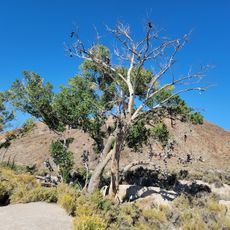
Carson Sink is a playa of about 300 square miles next to a swampy lowland of roughly 100 square miles in the Carson Desert, northern Churchill County, northwest of Fallon. It is bounded by the West Humboldt Range to the north and the Stillwater Range to the east; to the south the land rises slightly and is farmed. The southeastern fringe, where irrigation canals enter, forms the Stillwater Marsh wetlands.
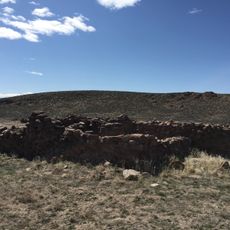
The Carson Sink was the terminus of the Carson River and a deep part of Pleistocene Lake Lahontan between 45,000 and 9,000 years ago. During the California Gold Rush, the Carson Trail crossed the basin, and the Forty Mile Desert section between the Humboldt and Carson rivers had no drinkable water for about 40 miles (64 km). A Pony Express station operated at Carson Sink from March 1860 until 1861.
Lone Rock, a solitary rock pinnacle rising from the playa, is held sacred by the Northern Paiute. The same northwest part of the sink forms the Carson Sink and Lone Rock working areas of the Fallon Range Training Complex, and the Bravo-20 range around the rock holds targets for combat aircraft training.
Access to the area is available from roads near Fallon, with cooler months offering the best visiting conditions. The open salt flats provide little shade, so plan accordingly for sun exposure and heat.
In June 1952 two U.S. Air Force colonels flying a B-25 from Hamilton Field to Colorado Springs reported three unknown aircraft passing within 800 yards of their plane over Carson Sink. The Air Defense Command said no military or civilian aircraft were in the area, and the case, known as the Carson Sink UFO incident, was never resolved.
The community of curious travelers
AroundUs brings together thousands of curated places, local tips, and hidden gems, enriched daily by 94,594 contributors worldwide.