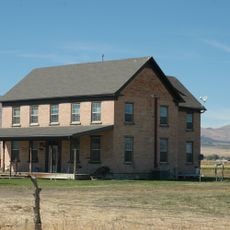
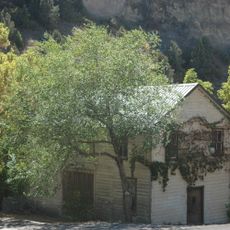
Japanese Village, Military testing facility in Dugway Proving Ground, Utah, US
The Japanese Village is a cluster of twelve double dwellings built on a military testing ground to precise specifications. The structures feature traditional Japanese materials and construction methods from the 1940s.
The village was built in 1943 by the US Army to evaluate incendiary bombing tactics during World War II through controlled tests. The project was part of broader military research to improve weapon effectiveness.
The buildings contain authentic Japanese household items like tatami mats, hibachi stoves, and traditional furniture that reflect everyday life from the 1940s. These details allowed military researchers to understand how fires would affect real living spaces.
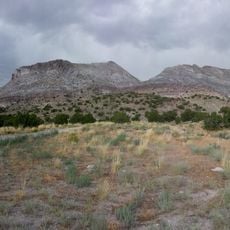
The site remains closed to public visitors since it operates within the restricted Dugway Proving Ground military testing area in Tooele County. Access to the structures is not permitted for security and safety reasons.
The renowned architect Antonin Raymond, who had spent years in Japan, designed these structures specifically for military experiments with incendiary weapons. His deep knowledge of Japanese architecture enabled an unusually authentic recreation for research purposes.
The community of curious travelers
AroundUs brings together thousands of curated places, local tips, and hidden gems, enriched daily by 92,406 contributors worldwide.