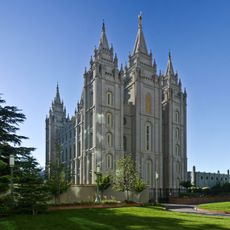
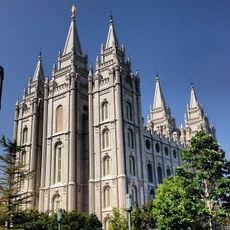
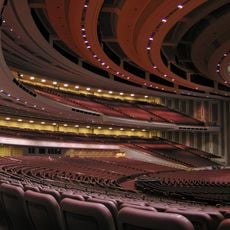
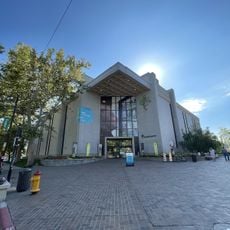
Salt Lake Tabernacle organ, Pipe organ in Temple Square, Salt Lake City, United States
The Salt Lake Tabernacle organ is a large pipe instrument featuring more than 11,600 pipes ranging from small components to very long shafts. The instrument has approximately 150 stops that produce a wide variety of tonal colors.
Joseph Ridges, an English-born builder, designed the organ for the Tabernacle under construction; work began in January 1866 and the instrument accompanied the choir by October 1867 with 12 stops and about 700 pipes. Niels Johnson added pneumatic aids and water-powered bellows around 1885, and the Kimball company replaced two-thirds of the pipes in 1901. Austin installed electric action in 1915 and widened the case with side wings; Aeolian-Skinner, led by G. Donald Harrison, created a largely new instrument dedicated in January 1949.
The organ accompanies the Tabernacle Choir at Temple Square on the weekly broadcast "Music and the Spoken Word" and has done so since the 1920s. Daily half-hour solo recitals at noon are a tradition, repeated at 2 pm in summer. Guest organists such as Dame Gillian Weir and Felix Hell have performed here.
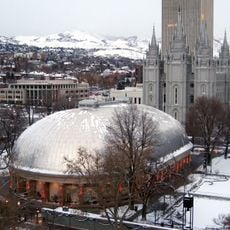
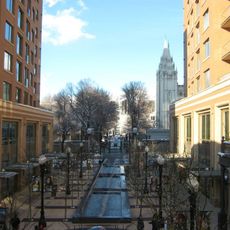
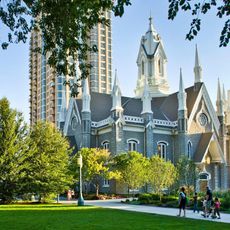
The organ is heard in half-hour recitals at noon, repeated at 2 pm during the busy summer tourist season. The Tabernacle stands on Temple Square in downtown Salt Lake City, reachable on foot from the surrounding streets. The console area includes a floor-level rotating platform installed during the 1984–1988 renovation to give visitors a better view.
The organ's first commercial recordings were made in 1910 by Tabernacle organist John J. McClellan for the Columbia Graphophone Company, the first commercially released recordings of a pipe organ. In 2020 the instrument became a graphic element of the Tabernacle Choir's new logo.
The community of curious travelers
AroundUs brings together thousands of curated places, local tips, and hidden gems, enriched daily by 93,173 contributors worldwide.