Hogup Cave, Archaeological cave in Box Elder County, Utah, United States
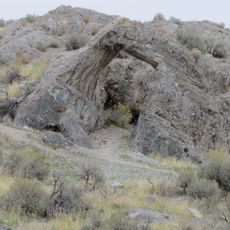
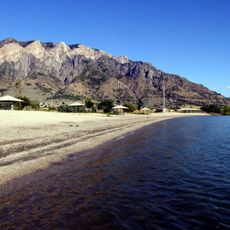
Hogup Cave is a two-chambered limestone cavern located on the southwestern slope of Hogup Mountain, extending into the Great Salt Lake Desert landscape. The site contains multiple distinct layers of accumulated materials that reveal how people occupied this space across different time periods.
C. Melvin Aikens of the University of Oregon led excavations at Hogup Cave in 1967 and 1968, uncovering 16 major stratigraphic layers. Deposits span from 6400 B.C. to about 1850 A.D., when the Shoshone used the cave as a seasonal camp. The lowest levels, dated to 8,000–7,000 years ago, held stone and bone tools, wild fruits, hides, baskets, and cordage; dog remains from 6100–5500 B.C. are among the oldest in the New World.
The cave's name comes from Hogup Mountain, whose lower slopes hold pickleweed and salt grass where herders later dug wells. Shoshone people used the cave as a camp into the 1850s while making seasonal rounds. Excavators found cordage, baskets, hides and coprolites that record how occupants processed plants and animals.
The cave sits at 41°22'14.6"N 113°15'22.1"W on the southwestern flank of Hogup Mountain, at an elevation of 1,432 metres, with the Great Salt Lake about ten miles to the east. The lowest biotic zone on the mountain, a narrow band of pickleweed and salt grass, holds wells dug by sheep herders that reveal groundwater, and a deep spring there may have supplied the cave's occupants. There is no drinking water at the site, so carry your own.
The cave preserved thousands of textile fragments, grinding stones, and cooking features that show how people managed daily tasks over many centuries. These objects offer a rare look into the practical details of how inhabitants actually lived and worked.
The community of curious travelers
AroundUs brings together thousands of curated places, local tips, and hidden gems, enriched daily by 94,917 contributors worldwide.