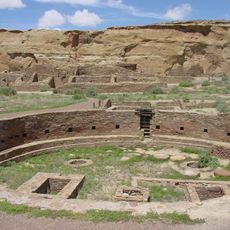
Pueblo Bonito, Archaeological site in San Juan County, United States.
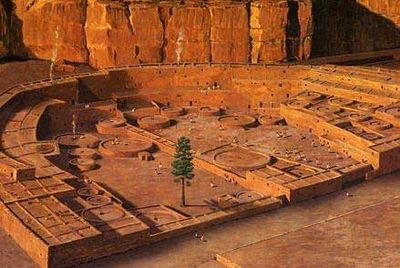
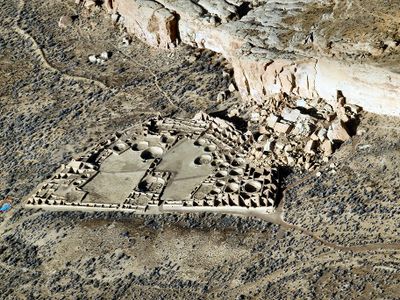
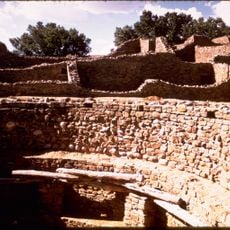
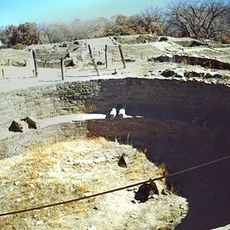
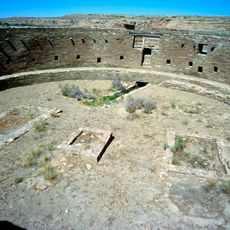
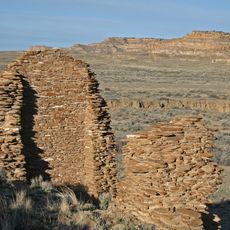
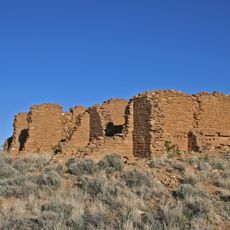
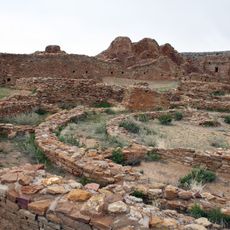
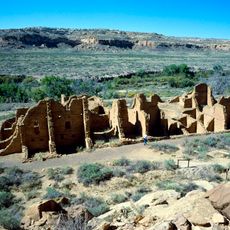
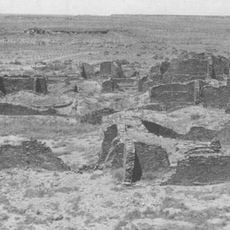
Pueblo Bonito is an excavated settlement in New Mexico spanning several acres with hundreds of stone rooms arranged in a distinctive D-shaped pattern. The structures display multiple stories and central chambers used for ceremonies and community gatherings.
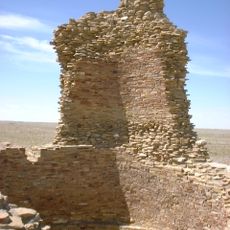
Built in stages between AD 850 and 1150 by Ancestral Puebloans, Pueblo Bonito was the center of the Chacoan world. In 1849, Lt. James H. Simpson and guide Carravahal recorded the ruins and gave them the Spanish name. Excavations by Richard Wetherill and George Pepper from 1896 to 1900 uncovered 190 rooms. In January 1941, Threatening Rock collapsed, destroying part of the rear wall.
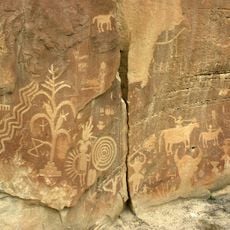
The name Pueblo Bonito was given in 1849 by Carravahal, a guide from San Juan Pueblo, during Lt. James H. Simpson's military expedition, not by Spanish conquistadors. The site's north-south dividing wall and paired Great Kivas reflect a symmetrical plan repeated in other Chacoan great houses. Petroglyphs behind the ruin include six-toed feet carved around AD 900–1000.
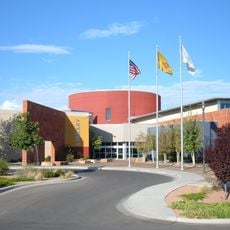
Visitors reach the ruins via a short, well-marked trail starting from a nearby visitor center with some elevation changes along the way. Early morning or late afternoon visits work best since sun exposure is less intense and walking is easier.
In 2009, traces of Mexican cacao from at least 1,200 miles away were detected in pottery sherds at Pueblo Bonito, the first proof the substance reached this region before the Spanish arrived around 1500. Cylindrical jars common in Central America are rare here: 111 were found among the roughly 800 rooms.
The community of curious travelers
AroundUs brings together thousands of curated places, local tips, and hidden gems, enriched daily by 93,196 contributors worldwide.