Ah-shi-sle-pah Wilderness, Wilderness area in northwestern New Mexico, United States
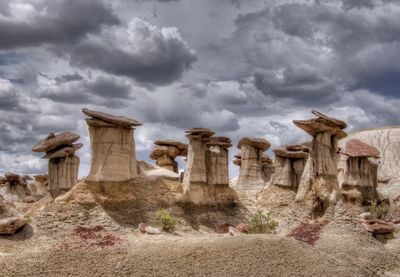
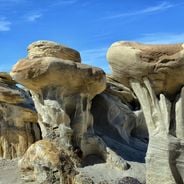
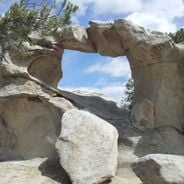
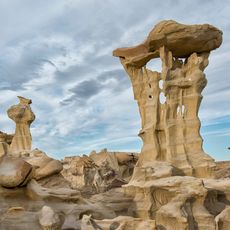
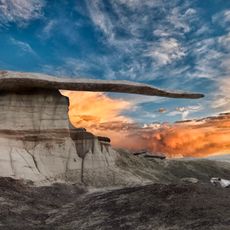
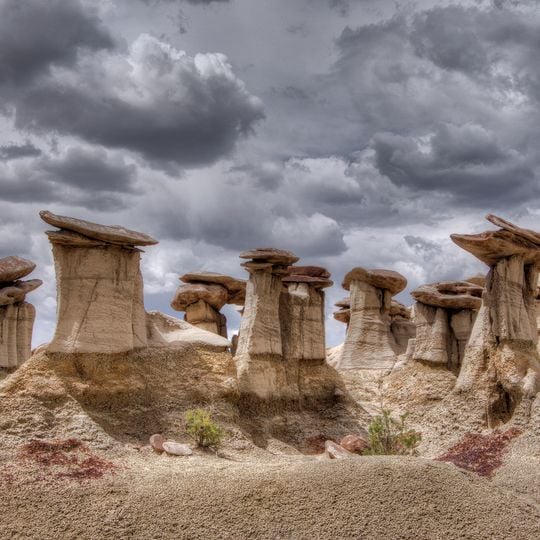
Ah-shi-sle-pah Wilderness is a protected desert landscape in northwestern New Mexico with clay hills shaped by water erosion and colorful sandstone formations scattered across the terrain. The terrain feels like a natural gallery of sculpted rock formations created by millions of years of geological processes.
A BLM Wilderness Study Area was declared here in May 1992, covering about 26.5 km2 (6,563 acres). Dinosaur hunter Charles Hazelius Sternberg prospected the area in summer 1921 and collected the type specimen of Pentaceratops fenestratus, a late Cretaceous ceratopsid. The John D. Dingell Jr. Conservation, Management, and Recreation Act, signed March 12, 2019, authorized establishing the wilderness within the National Wilderness Preservation System, protecting roughly 7,242 acres.
The name is a phonetic transliteration of the Navajo "áshįįh łibá", meaning "grey salt". Dinosaur hunter Charles Hazelius Sternberg prospected here in summer 1921 and collected the type specimen of Pentaceratops fenestratus. The ankylosaur Ahshislepelta minor, described in 2011 from a specimen found here between 2005 and 2009, is named after the area.
Reaching the site requires driving through remote desert roads, and there are no marked trails or visitor facilities within the area. Visitors should bring plenty of water, a capable vehicle, and navigation tools since the landscape offers little guidance and few services.
Visitors often find petrified wood fragments and visible dinosaur fossils scattered among the rock formations from different geological layers. These discoveries offer a direct window into life from millions of years ago.
The community of curious travelers
AroundUs brings together thousands of curated places, local tips, and hidden gems, enriched daily by 93,196 contributors worldwide.