Moki Dugway, Switchback road in San Juan County, Utah, United States
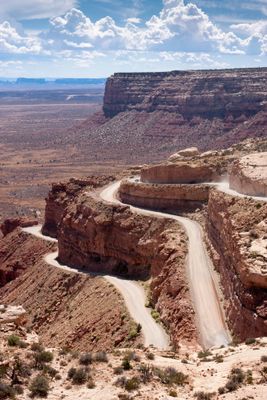
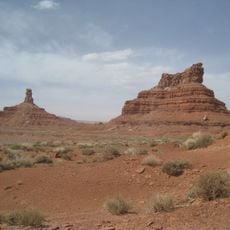
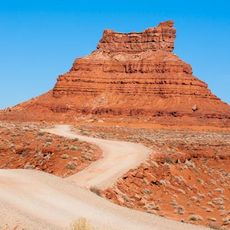
Moki Dugway is a 4.8 km section of Utah State Route 261 that climbs 335 m up the face of Cedar Mesa through tight switchbacks at an 11% grade. The upper part is unpaved and the lower part is paved. From the top, the road drops to the Valley of the Gods.
The Texas Zinc Minerals company built the Moki Dugway in the 1950s to haul uranium ore and vanadium from the Happy Jack Mine in Fry Canyon up Cedar Mesa for processing at a plant in Halchita near Mexican Hat. Ore-laden trucks once met in the curves; today no such traffic remains.
The name Moki comes from the Spanish word Moqui, used by Spanish explorers for the Pueblo peoples and the vanished Anasazi culture. Dugway, as defined in the Dictionary of the American West, is a road through mountainous country built for heavy transport, with deep ruts that kept wagon wheels from sliding sideways.
The unpaved road requires careful driving through sharp turns, with restrictions on larger vehicles that cannot navigate the narrow passages safely. Travelers should drive slowly and stay alert, as the exposed route offers little protection from the desert conditions.
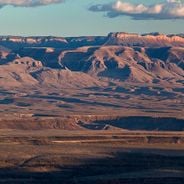
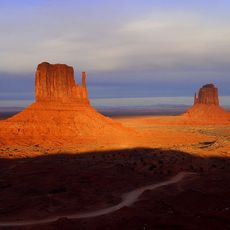
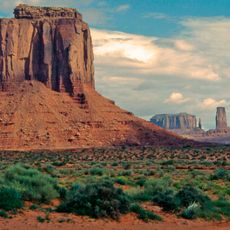
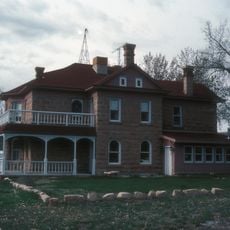
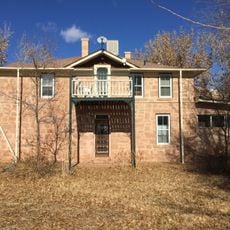
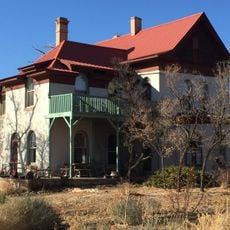
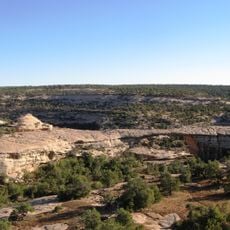
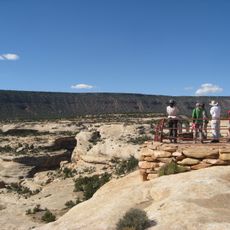
At the top of the road, the Moki Dugway Overlook faces the Valley of the Gods; the lone house on the plain below is a bed and breakfast, once called Lee's Ranch, the only dwelling in the 1,460 km² Cedar Mesa management area. On the horizon stand Sleeping Ute Mountain near Cortez, Colorado, Shiprock in New Mexico and the Carrizo Mountains.
The community of curious travelers
AroundUs brings together thousands of curated places, local tips, and hidden gems, enriched daily by 93,176 contributors worldwide.