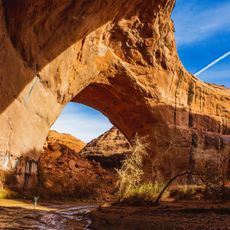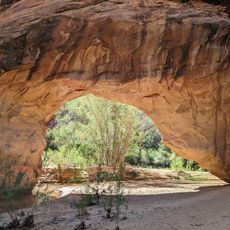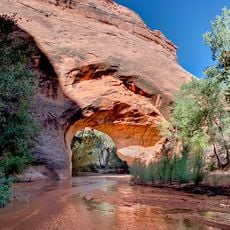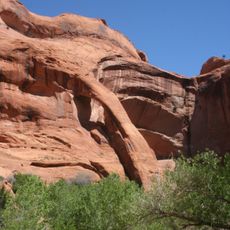
Coyote Gulch, Desert gulch in Escalante region, Utah, US
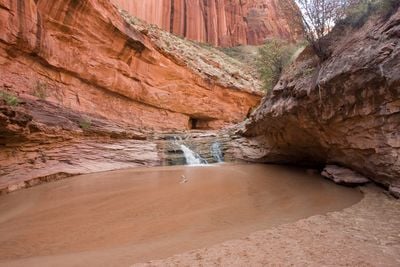
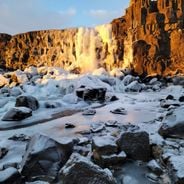
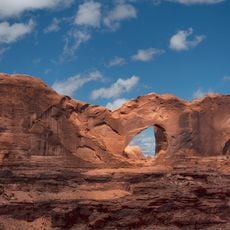
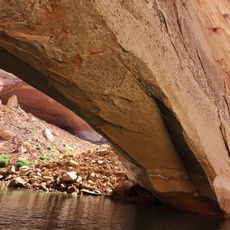
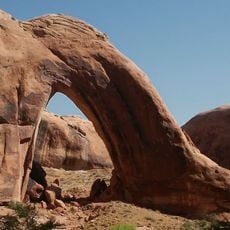
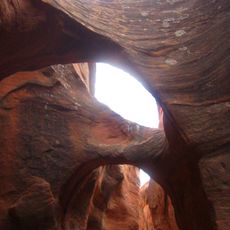
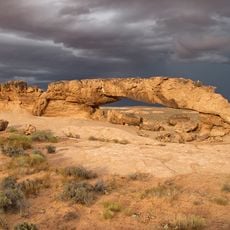
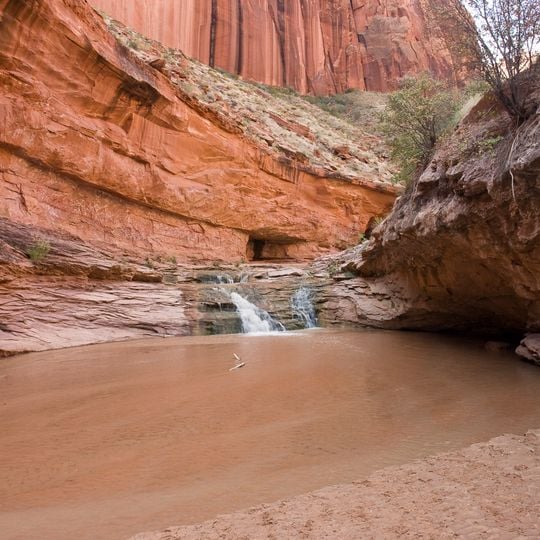
Coyote Gulch is a desert canyon in the Escalante region that winds through red sandstone formations, connecting multiple natural arches and waterfalls. The waterway eventually flows into the Escalante River near Lake Powell.
Coyote Gulch is a tributary of the Escalante River, over 25 mi (40 km) long, carved into sandstone layers up to 900 ft (270 m) deep. Its upper sections lie in Grand Staircase–Escalante National Monument, its lower sections in Glen Canyon National Recreation Area. The headwaters rise along a 14 mi (23 km) stretch of the Straight Cliffs Formation at the eastern edge of the Kaiparowits Plateau, where Dry Fork, Big Hollow, the main branch and Hurricane Wash merge.
Coyote Gulch takes its name from the coyote, an animal found throughout this part of Utah. The canyon's sandy streambed, usually only a few inches deep, serves as the walking route through the trees and vegetation along the floor. Downstream from the Dry Fork, Spooky Gulch narrows to about 15 inches, so hikers must remove their packs and walk sideways.
The main canyon is reached from trailheads along the unpaved Hole-in-the-Rock Road, which branches off Utah Scenic Byway 12 about 5 mi (8 km) east of Escalante. The Red Well trailhead leads into the main channel near Big Hollow Wash, and the Hurricane Wash trail starts just off the road. The Fortymile Ridge route squeezes through the Crack-in-the-Wall and descends a 600 ft (180 m) sand dune. The streambed is usually only a few inches deep, so expect wading.
The canyon maintains flowing water year-round, creating an unusual wetland pocket within the surrounding arid landscape. This constant water source supports a variety of plants and wildlife that would otherwise struggle to survive in the dry desert.
The community of curious travelers
AroundUs brings together thousands of curated places, local tips, and hidden gems, enriched daily by 93,195 contributors worldwide.