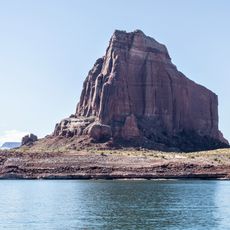
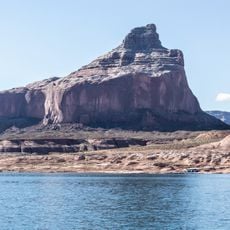
Navajo Mountain, Mountain summit in San Juan County, Utah, and Coconino County, Arizona, United States.
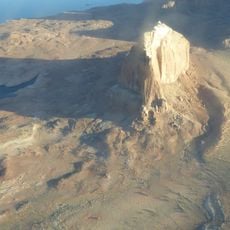
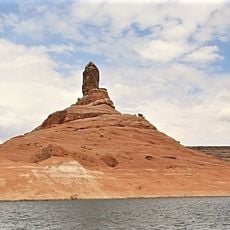
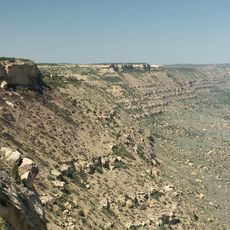
Navajo Mountain is a free-standing laccolith, a dome of igneous rock that intruded sedimentary layers and lifted the overlying Dakota Sandstone. Its summit reaches about 3,166 meters, making it the highest point on the Navajo Nation. The peak lies 3.5 km north of the Arizona border, mostly in San Juan County, Utah, with its southern flank extending into Coconino County, Arizona.
Spanish missionaries Anastasio Dominguez and Silvestre Velez de Escalante forded the Colorado River near the mountain in 1776 and met Paiute there. In the early 19th century San Juan Paiute and Navajo settled the surrounding mesas and canyons. In 1884 these tribes lost their traditional land between Navajo Mountain and Kayenta; over the years the Navajo added Paiute land to their reservation, and in the 1980s the Paiute applied for recognition as a separate tribe.
Known as Naatsisʼáán in Navajo, meaning Earth Head, it holds spiritual importance for three Native American tribes whose traditions and practices remain connected to the land. The mountain figures in sacred stories and ceremonies that continue to shape how these communities understand and relate to their surroundings.
Visitors need a permit from the Navajo Nation to enter the area, and climbing directly on the mountain itself is not allowed. These restrictions protect the land and ensure access happens only through approved routes and with proper preparation.
The Navajo Mountain beardtongue (Penstemon navajoa) is a rare plant found mainly on the upper slopes of this peak and almost nowhere else. The mountain also appears on early maps as Sierra Panoche, and its Navajo name Naatsisʼáán means "Earth Head".
The community of curious travelers
AroundUs brings together thousands of curated places, local tips, and hidden gems, enriched daily by 93,947 contributors worldwide.