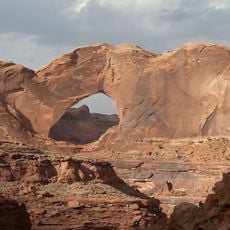
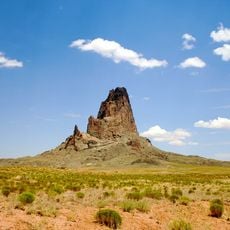
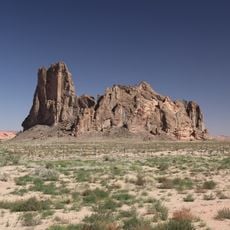
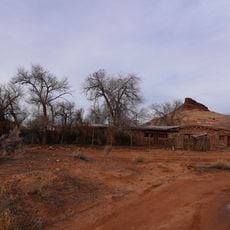
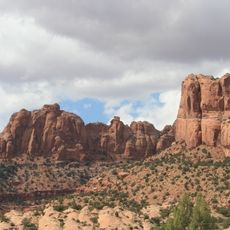
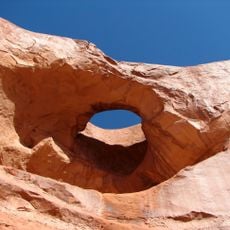
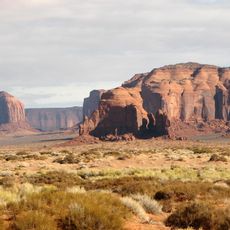
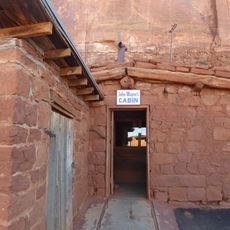
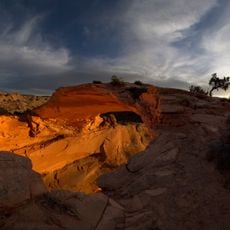
Navajo National Monument, Archaeological remains in Tsegi Canyon, Arizona, United States.
Navajo National Monument protects three Ancestral Puebloan cliff dwellings in sandstone alcoves on the Shonto Plateau above the Tsegi Canyon system in northern Arizona: Betatakin, Keet Seel and Inscription House. The buildings were made of sandstone blocks set with mud mortar and wood, with flat facades, small dark openings and protruding wooden beams. Betatakin sits in an alcove 452 feet high and 370 feet across.
Keet Seel was first occupied around 1250, with a construction boom between 1272 and 1275 that halted in 1286; the site was abandoned about 20 years later. Betatakin was built between 1267 and 1286. The Wetherill brothers reached Keet Seel in 1895, and in 1909 John Wetherill, Byron Cummings and Navajo guide Clatsozen Benully recorded Betatakin. President Taft proclaimed the monument on 20 March 1909.
The monument preserves artifacts and structures from ancestral Puebloan people and maintains living connections with Navajo and Hopi communities today. These ongoing relationships shape how the sites are understood and valued by those who visit and live nearby.
Betatakin is accessed by guided ranger tours, while Keet Seel requires advance reservations and involves a long hike with significant elevation changes. Visitors should come prepared for varying trail conditions and bring water and sturdy footwear.
Betatakin's alcove measures 452 feet high and 370 feet across, and the dwelling held about 120 rooms when it was abandoned; roughly 80 remain after rock falls inside the alcove. It has a single kiva, while Keet Seel has several. In Hopi the place is called Talastima, "Place of the Corn Tassel".
The community of curious travelers
AroundUs brings together thousands of curated places, local tips, and hidden gems, enriched daily by 93,195 contributors worldwide.