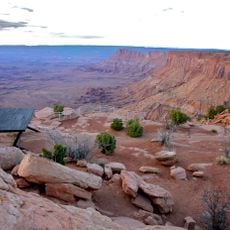
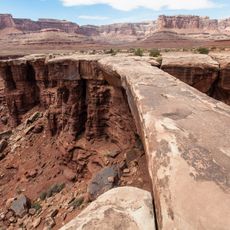
Utah monolith, Metal sculpture in Lockhart Basin, US.
The Utah monolith was a narrow, vertical prism of riveted metal sheets, about three meters tall, with flat faces and sharp, straight edges. Its stainless steel surface showed darker mottled patches and vertical streaks, and its flat top sat level above a base set directly on sandy ground in a rocky red landscape. No inscription appeared on any face.
The pillar was placed on public land in Lockhart Basin between July and October 2016 and stayed unnoticed until November 2020, when state biologists surveying bighorn sheep by helicopter spotted it. On 27 November 2020 four Moab residents removed it themselves and later handed it to the Bureau of Land Management, which has held it since.
The installation sparked international debates about unauthorized artworks in natural spaces and drew thousands of visitors to a previously forgotten area. Local communities discussed intensely the protection of public land and the boundaries between art and illegal occupation of terrain.
Authorities removed the structure due to high visitor traffic to this remote spot and the damage to the fragile desert environment caused by trampling the terrain. Hikers visiting the area today find only the natural landscape of the basin and occasional traces of previous visitor flows.
Internet users employed satellite imagery and geographical data to identify the location of the structure, leading to a massive influx of visitors within days. The exact origin and creator of the installation remain unknown to this day, although several artists and collectives have been accused.
The community of curious travelers
AroundUs brings together thousands of curated places, local tips, and hidden gems, enriched daily by 92,071 contributors worldwide.