Newspaper Rock State Historic Monument, Petroglyphic site in San Juan County, United States
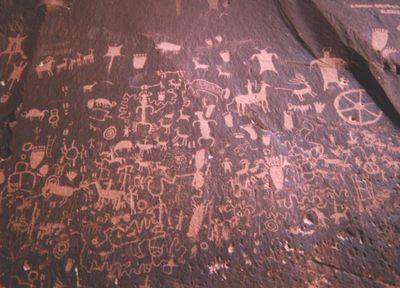
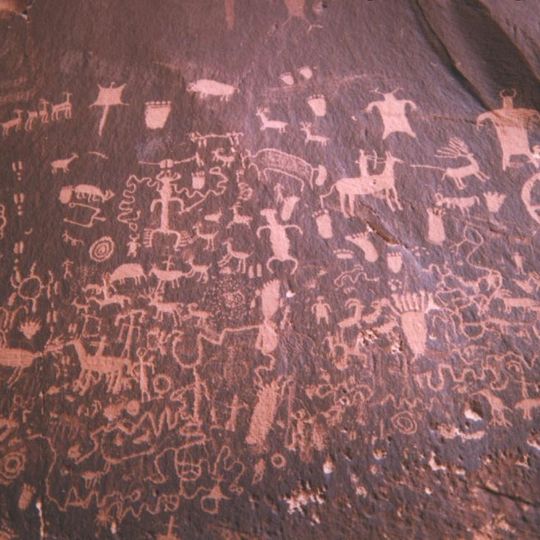
Newspaper Rock is a 200-square-foot (19 m2) panel of vertical Wingate sandstone at the upper end of Indian Creek Canyon, its face darkened by desert varnish and cut with more than 650 petroglyphs. Figures were pecked through the varnish to expose lighter rock: horned and antlered animals, human forms with raised arms, bird shapes, spirals, circles and meandering lines, with no clean border to the markings.
Different groups of Native Americans created these rock carvings over roughly 2000 years, starting about two millennia ago and continuing into the early 1900s. Archaic peoples, Anasazi, Fremont, and later Navajo left their marks on the same panel, each group adding its own styles and messages.
The Navajo name Tse' Hone' means "rock that tells a story". The panel records Archaic, Basketmaker, Fremont and Ancestral Puebloan carving from around the start of the current era until about 1300, with Ute, Navajo and Anglo marks added in historic times. One suggestion is that the rock served as a place of communication between travellers.
The site lies about 28 miles (45 kilometers) northwest of Monticello along Utah State Route 211, with a paved parking area right next to the rock. A viewing platform with mounted spotting scopes helps make out individual petroglyphs on the tall panel.
Several carved figures show hands and feet with extra fingers or toes, a sign of polydactyly, a genetic trait. These depictions may suggest that people with this condition were more common in those communities or held a special role.
The community of curious travelers
AroundUs brings together thousands of curated places, local tips, and hidden gems, enriched daily by 93,182 contributors worldwide.