Powderhorn Wilderness, Wilderness area in Gunnison and Hinsdale counties, Colorado, United States
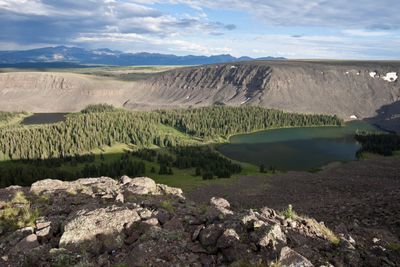
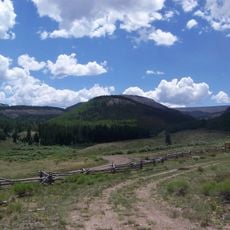
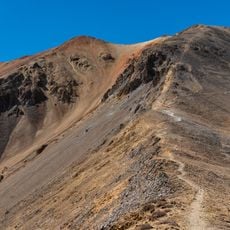
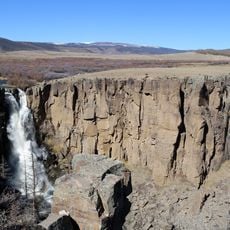
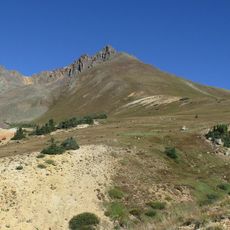
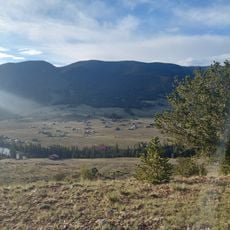
Powderhorn Wilderness covers 62,050 acres in Gunnison and Hinsdale counties, Colorado, 5 miles northeast of Lake City. Its central high ground is formed by 16- to 19-million-year-old basaltic lava flows of the Hinsdale Formation, creating two broad alpine ridges: Calf Creek Plateau, rising to 12,661 feet, and Cannibal Plateau. The northern 77.5% lies on Bureau of Land Management land, the southern 22.5% in Gunnison National Forest.
Congress officially protected this land as a wilderness area in 1993, establishing joint management between two federal agencies to preserve its natural character. This designation reflected growing efforts to safeguard undeveloped mountain regions in the West.
Cannibal Plateau, the wilderness's second-highest ridge at 12,661 feet, carries a name tied to Colorado frontier stories of the 1870s. The same massif holds Calf Creek Plateau, the wilderness's highest point. Hikers on the tundra ridges pass place names that recall this regional lore.
Six trailheads give access: Devils Creek (8,478 ft) to the west; Powderhorn Lake (11,143 ft) and Ten Mile Spring (9,327 ft) along the north and northeast; Deer Lakes (10,444 ft), Brush Creek (9,926 ft) and Powderhorn Park (9,047 ft) to the south. They link 45 miles of trails. Travel is limited to foot and horseback.
The Hinsdale Formation basalt flows forming the high ridges are dated at 16 to 19 million years old and are considered among the best preserved of the area's last volcanic events. The same flows build both Calf Creek Plateau and Cannibal Plateau.
The community of curious travelers
AroundUs brings together thousands of curated places, local tips, and hidden gems, enriched daily by 94,589 contributors worldwide.