Lolo Pass, Mountain pass in Bitterroot Range, United States
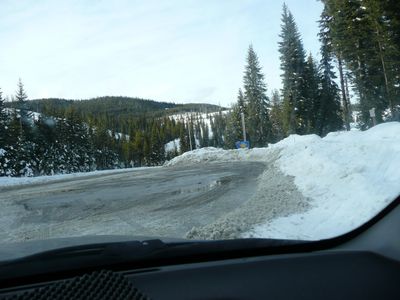
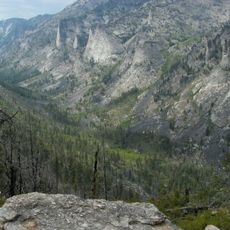
Lolo Pass is a mountain pass at 5,233 feet (1,595 m) in the Bitterroot Range of the northern Rocky Mountains, on the Montana–Idaho border about 40 miles west-southwest of Missoula. It is the highest point of the historic Lolo Trail, which runs between the Bitterroot Valley in Montana and the Weippe Prairie in Idaho. U.S. Highway 12 crosses the pass.
The Lolo Trail over the pass was used by the Nez Perce in the 18th century and crossed by the Lewis and Clark Expedition, guided by Old Toby of the Shoshone, in September 1805. In 1877 Nez Perce under Chief Joseph crossed the pass during the Nez Perce War, and the two sides clashed shortly after at the Battle of the Big Hole in Montana. The trail was designated a National Historic Landmark on 9 October 1960 and listed on the National Register of Historic Places on 15 October 1966.
The Salish name for the route is naptnišaqs, "Nez Perce Trail". The name Lolo is not from Lewis and Clark, who never used it; it first appears in David Thompson's 1810 journal, which lists three fur trappers, probably French, named Michael, Lolo and Gregoire. A Salish rendering of the French name Laurence or Laurent has been suggested, but the word was probably a common French nickname.
The pass is accessible by vehicle using U.S. Route 12, which connects communities on both sides of the mountains. Travel during warmer months is easier, as snow and weather conditions can close or limit access during winter and early spring.
The name Lolo does not appear in Lewis and Clark's journals. Its first known mention is in David Thompson's 1810 journal, which lists three fur trappers, probably of French descent, named Michael, Lolo and Gregoire. A common claim that it is the Salish form of the French name Laurent is uncertain; it was probably a regular French nickname.
The community of curious travelers
AroundUs brings together thousands of curated places, local tips, and hidden gems, enriched daily by 94,894 contributors worldwide.