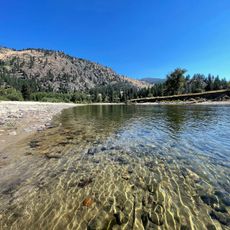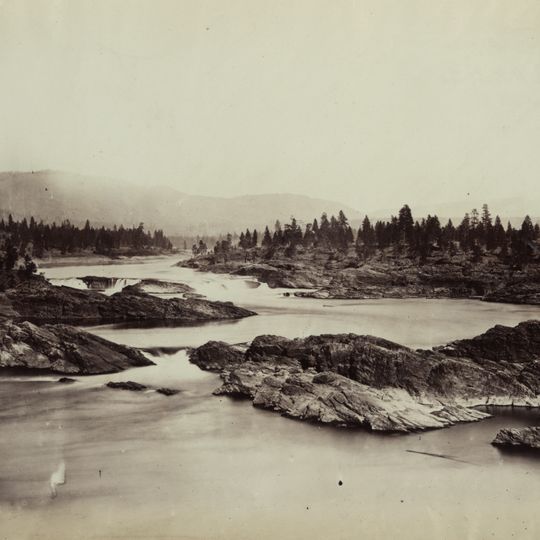
Kettle Falls, Waterfall on Columbia River, United States
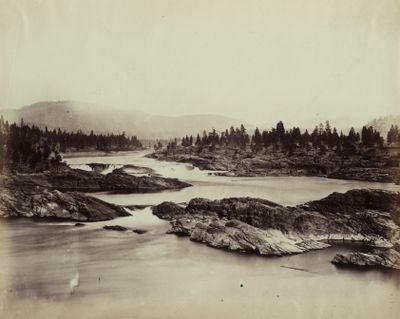
Kettle Falls was a waterfall system on the Columbia River in Stevens County that cascaded over quartzite rocks left by prehistoric Missoula floods. The falls descended roughly 50 feet through a series of rapids and smaller drops before being submerged beneath what is now Franklin D. Roosevelt Lake.
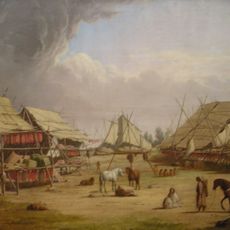
Native American peoples operated fishing stations at this location for thousands of years until the Grand Coulee Dam's construction submerged the falls in 1940. The dam project marked the end of one of the region's oldest continuous settlements and reshaped the Columbia River's ecosystem.
The Salish people named these falls 'Shonitkwu', meaning loud waters, and used the site for generations to fish during the seasonal salmon runs. Visitors today can learn about this heritage through local museum exhibits and interpretive displays that honor the area's Indigenous history.
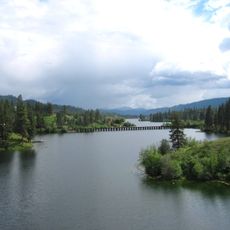
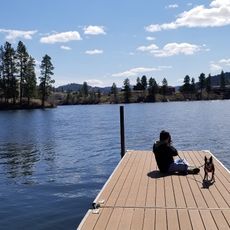
The falls location now lies beneath Franklin D. Roosevelt Lake, created by the Grand Coulee Dam project upstream on the Columbia River. Visitors interested in learning about this submerged place can explore nearby museums and historical markers that document its former significance.
Before submersion, the falls formed a natural barrier that concentrated salmon migrations, turning this into one of North America's richest fishing grounds. This exceptional role as a food source is why the site remained continuously inhabited for thousands of years.
The community of curious travelers
AroundUs brings together thousands of curated places, local tips, and hidden gems, enriched daily by 91,023 contributors worldwide.