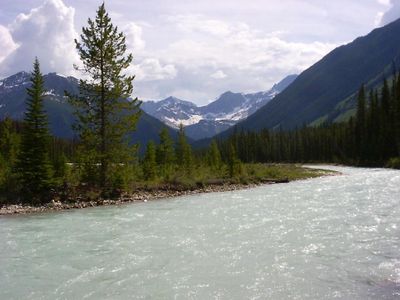
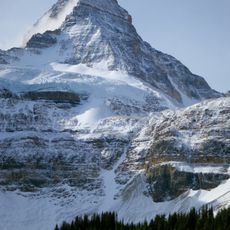
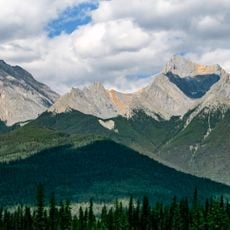
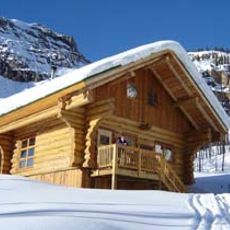
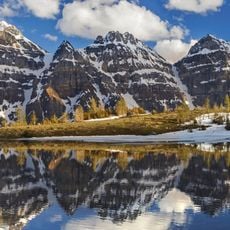
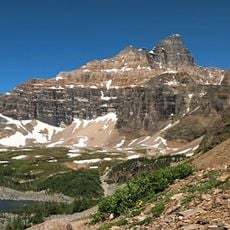
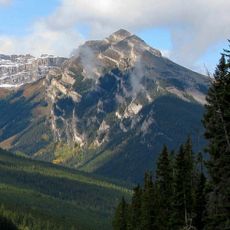
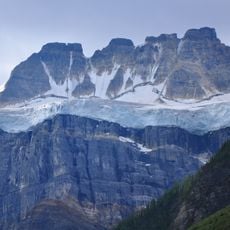
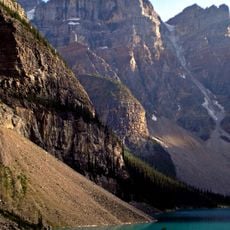
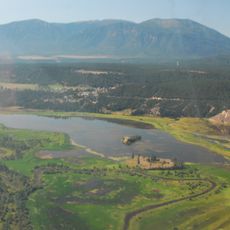
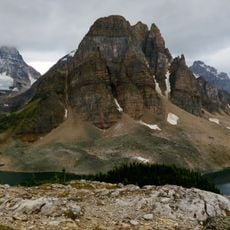
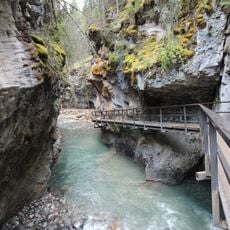
Vermilion River, Mountain brook in Kootenay National Park, Canada
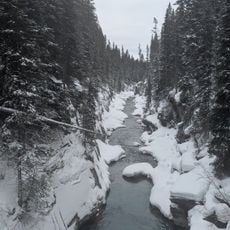
The Vermilion River flows through a mountain valley, carving out a natural passage between towering ridges in Kootenay National Park, British Columbia. It gathers water from several tributaries before joining the Kootenay River downstream.
Sir George Simpson made the first documented European expedition to the Vermilion River in 1841, opening this region to wider exploration. Indigenous peoples, particularly the Ktunaxa, had inhabited and used these waterways for generations before European arrival.
The river's name comes from the vermilion-coloured ochre earth found near Vermilion Pass at its source, a pigment used by Indigenous peoples of the region. Ochre Creek, a right-bank tributary, carries the same reference. The Ktunaxa have long used these mountain waterways, and Highway 93 now follows the river's entire course through the park.
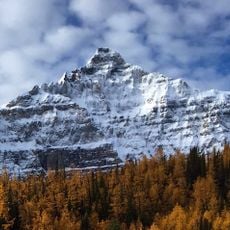
Highway 93 runs alongside the river for its whole length inside Kootenay National Park, from Vermilion Pass down to the confluence with the Kootenay River below Kootenay Crossing. Numa Falls is reached directly from the highway. The river rises at about 2,000 m between Chimney Peak and Mount Whymper, 5.5 km west of Vermilion Pass.
The river rises at 2,000 m on the continental divide, 5.5 km west of Vermilion Pass between Chimney Peak and Mount Whymper, then turns southwest at the pass. Highway 93 follows its whole course through the park to the Kootenay River below Kootenay Crossing.
The community of curious travelers
AroundUs brings together thousands of curated places, local tips, and hidden gems, enriched daily by 93,838 contributors worldwide.