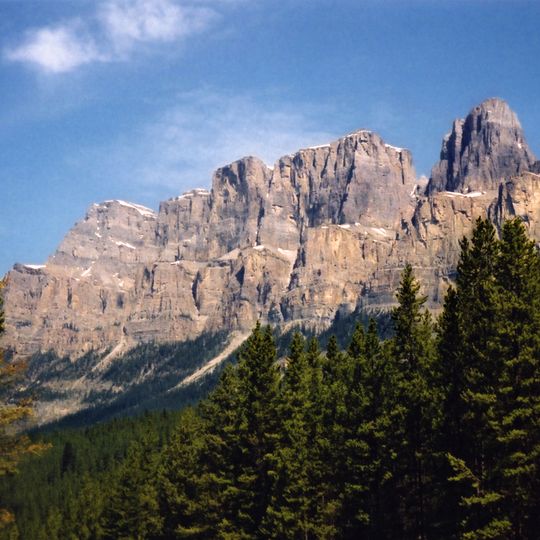
Castle Mountain, Mountain in Banff National Park, Alberta, Canada
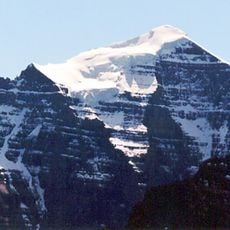
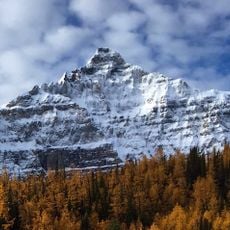
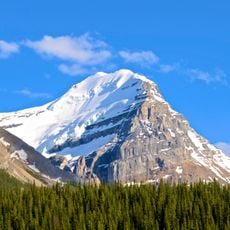
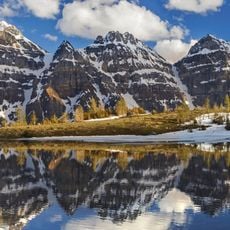
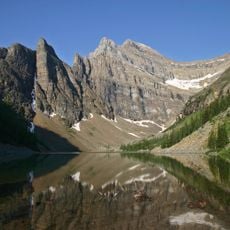
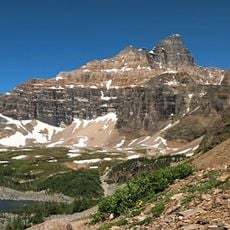
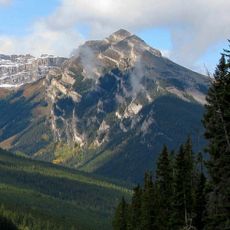
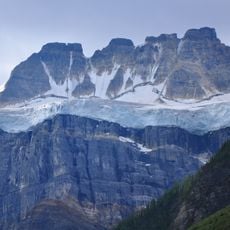
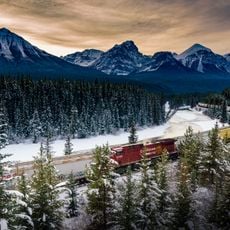
Castle Mountain is a layered peak in Banff National Park, about halfway between Banff and Lake Louise, where the Castle Mountain Fault thrusts older limestone, dolomite and quartzite over younger rock. Erosion of alternating hard and soft shale layers has cut the flat terraces and cliffs that give the mountain its castellated profile. Its upper crevices hold small snow patches above dark coniferous forest.
James Hector first documented this mountain in 1858 during the Palliser Expedition while exploring the Bow River headwaters. It received a different official name from 1946 to 1979 before returning to its original designation.
The Siksika name Miistukskoowa was formally recognized in the January 25, 2017 land-claim settlement between Canada and the Siksika Nation, which ended a grievance dating to 1908. The agreement granted about $123 million and ongoing park access for cultural, traditional and educational purposes.
The main climbing route uses the Rockbound Lake trail and requires technical climbing skills for certain sections. Plan to start early and be prepared for variable mountain weather conditions throughout the day.
A southeastern rock pinnacle still carries the Eisenhower Tower designation, a remnant of the mountain's former official name. This naming choice reflects a brief but notable chapter in the peak's history.
The community of curious travelers
AroundUs brings together thousands of curated places, local tips, and hidden gems, enriched daily by 93,792 contributors worldwide.