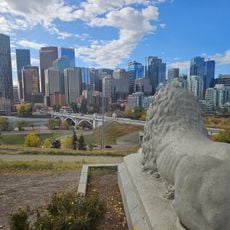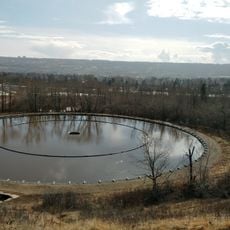
Nose Hill Park, Natural urban park in Northwest Calgary, Canada
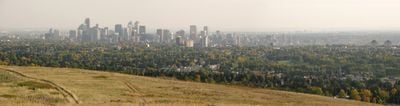
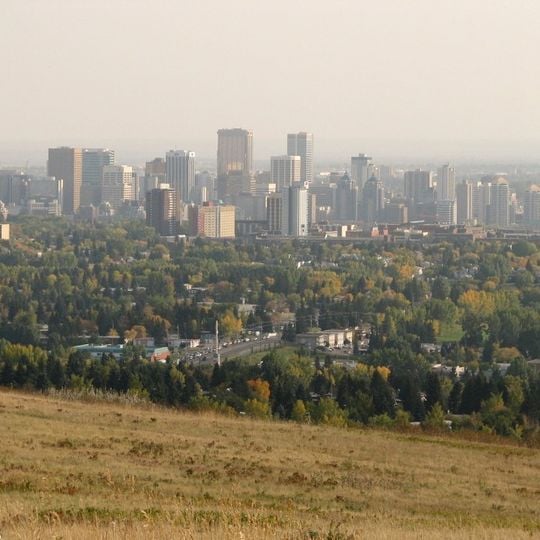
Nose Hill Park is a municipal natural park in Calgary's northwest quadrant, covering 11.27 km2, measuring 4.8 km north to south and 4.0 km east to west, and rising from 1125 to 1230 m. It is bounded by John Laurie Boulevard NW to the south, Shaganappi Trail NW to the west, 14 Street NW to the east and the MacEwan community to the north. The hill's bedrock is sandstone and shale capped with river gravels and glacial till; more than 300 km of informal paths cross its rough fescue grassland.
In 1971 Hartel Holdings sought zoning changes to build a residential community on the site. Local residents, notably from North Haven, and the Calgary Field Naturalists' Society lobbied the city; on 3 July 1972 the city deferred development, and by 16 April 1973 it restricted building on 4,100 acres. A municipal plan was adopted on 12 March 1979, and in 1984 the Supreme Court of Canada upheld the city's right to purchase the land at its own pace.
The park was an important hunting ground for Indigenous peoples who set up camps and pursued bison across these lands. Visitors can still see traces of this past through stone rings and archaeological sites scattered throughout the area.
The park stretches about 4.8 km north to south and 4.0 km east to west, rising from 1,125 m to 1,230 m. It is bounded by John Laurie Boulevard NW to the south, Shaganappi Trail NW to the west, 14 Street NW to the east and the MacEwan community to the north. More than 300 km of informal paths cross the hill; the city has proposed 60 km of managed trails, 52 km of them dirt and gravel and 8 km paved.
The park protects one of North America's last intact rough fescue grassland ecosystems with remarkably diverse plant life. This rare habitat attracts botanists and nature enthusiasts from far and wide.
The community of curious travelers
AroundUs brings together thousands of curated places, local tips, and hidden gems, enriched daily by 92,806 contributors worldwide.