Fishing Cone, Geyser in West Thumb Basin, Yellowstone National Park, US
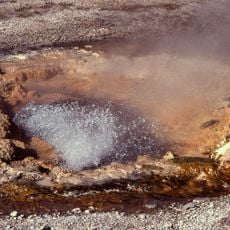
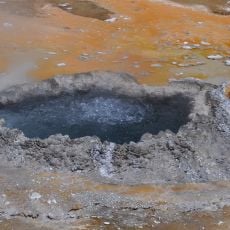
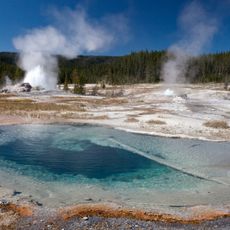
Fishing Cone is a cone-shaped geothermal formation at the edge of Yellowstone Lake in West Thumb Basin. The structure releases water heated to temperatures exceeding 93 degrees Celsius (200 degrees Fahrenheit).
The name comes from tales told by mountain men of a lake where a fish could be caught and immediately dunked into the hot spring to cook on the hook. A member of the 1870 Washburn-Langford-Doane Expedition popularized the feat. In November 1911 a ban on boiling live fish in the spring was announced, effective in early 1912 after animal welfare concerns.
The name traces to mountain men's tales of a lake where a fish could be caught, dunked in a hot spring and cooked on the hook. A member of the 1870 Washburn-Langford-Doane Expedition popularized the feat, and Henry Winser's 1883 tourist manual described trout boiled in three to five minutes. A ban on boiling live fish took effect in early 1912.
The site is easily accessible from the park road and offers good views of the formation and the lake. Visitors should stay on designated paths and keep a safe distance from the hot water areas.
During spring months, rising lake waters submerge the cone, temporarily transforming it into a hot spring with reduced thermal activity. This seasonal shift makes the feature a dynamic place that changes with the time of year.
The community of curious travelers
AroundUs brings together thousands of curated places, local tips, and hidden gems, enriched daily by 92,629 contributors worldwide.