Yellowstone volcano, Supervolcano in Wyoming and Idaho, United States.
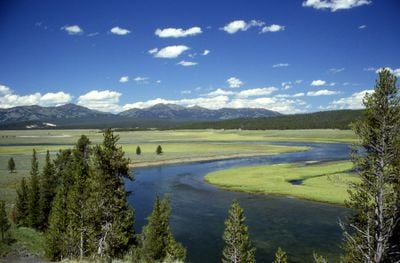
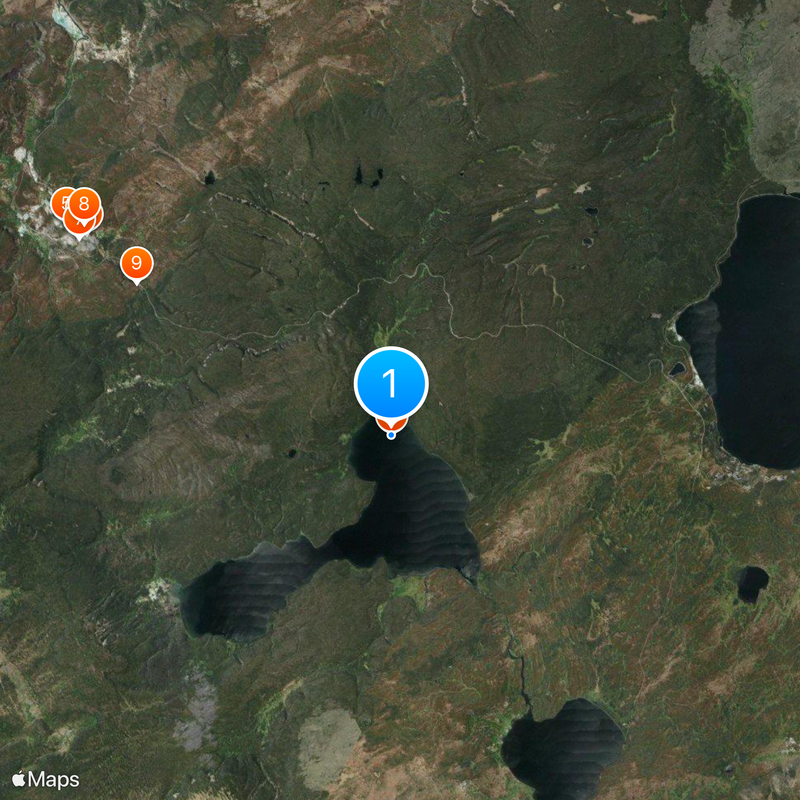
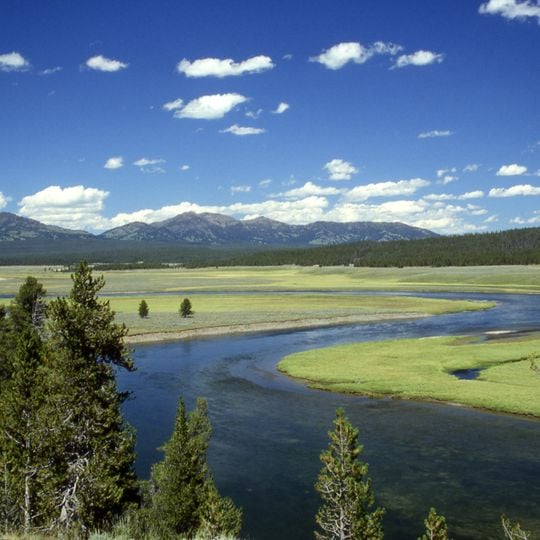
The Yellowstone Caldera is a volcanic caldera in Yellowstone National Park, mostly in Wyoming, measuring about 55 by 72 km (34 by 45 mi) as determined by Robert Christiansen of the USGS in the 1960s and 1970s. It is a compound structure with two overlapping collapse areas associated with the Mallard Lake and Sour Creek structural highs. The caldera occupies about one-third of the park.
Three large eruptions took place over the past 2.1 million years, with the most recent one occurring 640,000 years ago and forming the caldera seen today. Since then, magma has accumulated beneath the crust without producing another major eruption.
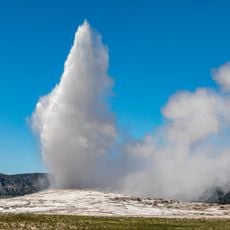
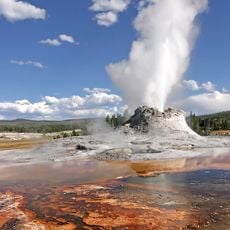
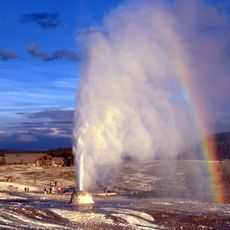
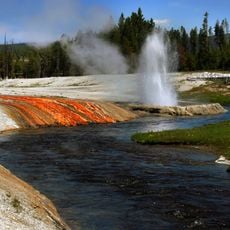
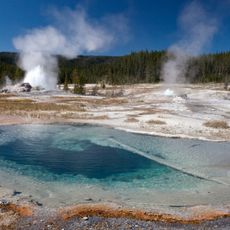
Rangers guide visitors to overlooks where they can watch steam vents and hot springs powered by the volcanic system below. Geologists work on site and often explain to visitors how monitoring equipment functions and what it reveals about activity beneath the surface.
The caldera lies mostly in Yellowstone National Park, with its southern boundary near Island Park, Idaho. Boardwalks cross the thermal basins, and visitors should stay on marked paths and away from thin crust. The Yellowstone Volcano Observatory monitors earthquakes and ground deformation and does not consider an eruption imminent.
The underground reservoir holds roughly 1,000 cubic miles (4,000 cubic kilometers) in volume, but only between 5 and 15 percent of it is actually molten rock. The rest consists of solidified or partly solidified material that surrounds and insulates the magma.
The community of curious travelers
AroundUs brings together thousands of curated places, local tips, and hidden gems, enriched daily by 92,134 contributors worldwide.